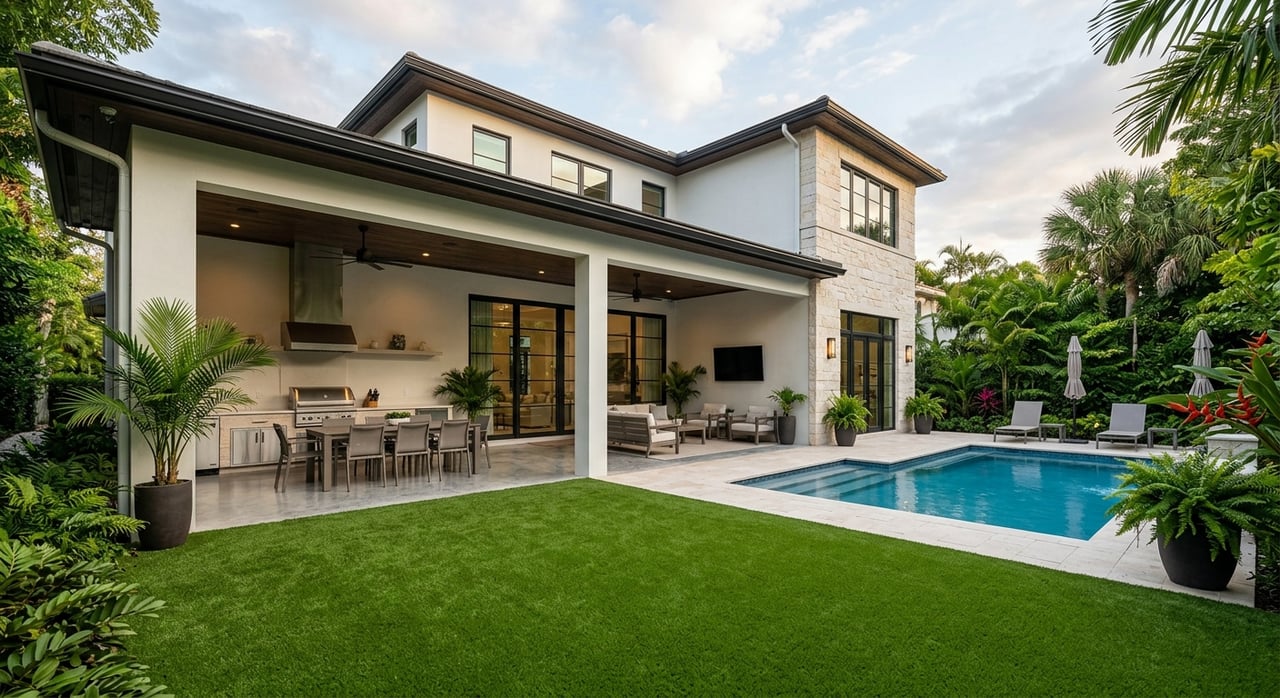
If you are planning a move-up purchase in Broward, Weston and Parkland probably keep landing on your shortlist. Both are established suburban markets with strong buyer demand, active community amenities, and a reputation for attracting households that want more space and a more polished day-to-day lifestyle. The real question is not which city is “better,” but which one fits your budget, priorities, and long-term plans more closely. Let’s dive in.
Weston vs. Parkland at a glance
For many move-up buyers, the biggest difference shows up immediately in price and pace. As of March 31, 2026, Zillow reports Weston’s average home value at $730,059 and median sale price at $719,167, while Parkland’s average home value is $1,058,618 with a median sale price of $1,047,050.
That gap matters because it shapes what your next step looks like. In simple terms, Weston tends to offer a lower entry point into the upscale suburban market, while Parkland asks for a higher budget from the start.
Market speed is also different. Zillow shows homes going pending in about 70 days in Weston compared with about 38 days in Parkland, which suggests Parkland is currently moving faster.
Inventory helps tell the same story. Weston has 408 homes for sale versus 198 in Parkland, so Weston appears to offer more choices, while Parkland looks tighter and more competitive.
Price and inventory differences
If your move-up plan includes staying flexible and comparing several options, Weston may feel easier to shop. More inventory can mean more chances to compare floor plans, lot setups, and HOA structures without feeling rushed.
If you are targeting a higher price ceiling and are prepared for a faster-moving market, Parkland may line up better with your goals. Its current pricing and lower inventory suggest a more scarcity-driven environment.
Both cities are selling at modest discounts to list, with median sale-to-list ratios around 0.96. That means neither market looks wildly one-sided based on the current data, but Parkland’s faster timeline may still require quicker decision-making.
Schools and boundary planning
For many move-up buyers, schools are part of the search from day one. Weston’s city school information says the public schools serving the city consistently achieve high performance ratings, and the city’s listed feeder schools show A grades in the most recent years posted for schools such as Country Isles Elementary, Eagle Point Elementary, Manatee Bay Elementary, Falcon Cove Middle, Tequesta Trace Middle, and Cypress Bay High.
Parkland also has a school-driven identity. The city lists core public schools including Heron Heights Elementary, Park Trails Elementary, Riverglades Elementary, Westglades Middle, and Marjory Stoneman Douglas High, and GreatSchools currently describes several of these schools as performing above average compared with Florida schools serving the same grade levels.
The biggest practical difference is not just school reputation. It is boundary certainty.
Why Parkland buyers should verify boundaries
Parkland’s FY2024 adopted budget says public schools in the city were near or over capacity. The city also notes modular classrooms at Park Trails and Heron Heights, a 24-classroom addition at Riverglades, and a rezoning of about 350 rising freshmen from the Marjory Stoneman Douglas boundary to Coral Glades High.
If you are planning several years ahead, that makes address-level school verification especially important in Parkland. Before you tour or write an offer, confirm the current assigned schools for that exact property.
What Weston offers school-focused buyers
Weston’s school picture reads as more established and citywide in how it is presented. The city notes that Weston schools are part of Broward County Public Schools and highlights consistently strong listed school grades across major feeder patterns.
That does not remove the need to verify assignments, but it does suggest a more predictable school-search experience for many buyers. If your search starts with school planning, Weston may feel more straightforward to navigate.
Community feel and daily lifestyle
Weston and Parkland both appeal to buyers looking for a more polished suburban setting, but they do not feel identical. Their official city descriptions point to different lifestyles.
Weston describes itself as a master-planned community covering 27 square miles. The city’s parks and recreation system includes 15 municipal park and recreation facilities and more than 245 acres of park land, with a mix of passive parks, athletic complexes, year-round classes, and organized programs.
Parkland presents a slightly different identity. The city emphasizes a peaceful suburban setting, open space, trails, and a history connected to ranch land, which creates a different feel from a more uniform master-planned city.
Weston’s more structured environment
If you like consistency, Weston may check more boxes. The city is unusually direct in saying that most residences are in private developments governed by HOAs, and those HOAs maintain infrastructure, roadways, and landscaping within the communities.
For some buyers, that structure is a plus. It can translate into a more standardized look, clearer exterior expectations, and a more uniform neighborhood feel from one section to the next.
Parkland’s more open-space feel
Parkland also has many HOA communities, and the city maintains an HOA directory. Still, its public-facing identity leans more toward open land, trails, recreation, and a bit more variation in neighborhood character.
That difference matters if you are trying to move up not just in square footage, but in how your property feels day to day. Parkland may appeal more if you want a setting that feels a little less uniform and a little more spacious.
Yard size, lot character, and privacy
Neither city publishes a simple citywide average for yard size, so this comparison is best treated as a search strategy rather than a hard rule. Based on the cities’ histories and planning patterns, Parkland appears more likely to offer larger-lot or estate-style pockets.
Parkland’s ranching roots and references to areas like The Ranches support that idea. In practical terms, if your top priorities are usable yard space, a more spread-out feel, or added privacy, Parkland may deserve a closer look.
Weston, by contrast, is more consistently master-planned and HOA-governed. That often lines up with more standardized subdivision layouts and more consistent exterior presentation.
If your household values order, predictability, and a cohesive neighborhood look, Weston may feel like the cleaner fit. If you want to prioritize lot size and breathing room first, Parkland may offer more of that character.
Parks and amenities compared
Both cities offer strong amenities, but the style of those amenities is different. That is why it helps to compare how you would actually use them, not just count them.
Weston’s system feels more municipally programmed. The city highlights a community center, classes, shaded playgrounds, sports leagues, and a broad public park system that supports a structured family routine.
Parkland’s amenity mix leans more heavily into open space and active outdoor recreation. Terramar Park includes baseball and softball fields, basketball courts, tennis courts, pickleball courts, trails, and open space, while Wedge Preserve Park is planned as a 36-acre park with splash pads, a mini play village, a ninja course, boardwalks, basketball, pickleball, and ball fields.
Which amenity style fits your family?
Weston may fit better if you want an established, organized park system that easily supports weekly routines. Think classes, leagues, playground time, and a more centralized suburban setup.
Parkland may fit better if your family naturally spends more time outdoors and wants trails, larger open spaces, and recreation with a more expansive feel. Neither is inherently better. It depends on how you live.
How to choose between Weston and Parkland
If you are deciding between these two Broward move-up markets, focus on the filters that affect daily life most:
- Budget: Weston currently offers a lower average price point than Parkland.
- Urgency: Parkland is moving faster based on current days-to-pending data.
- Choice: Weston has more active inventory, which may give you a broader search.
- School planning: Verify exact boundaries in both cities, with extra caution in Parkland because of recent capacity and rezoning pressure.
- Neighborhood style: Weston tends to feel more uniform and HOA-driven, while Parkland may offer more lot variation and open-space character.
- Amenity use: Weston leans more structured and programmed, while Parkland leans more trail- and open-space-oriented.
For many families, the answer becomes clearer once you rank these tradeoffs in order. When you do that, Weston often emerges as the stronger fit for buyers who want consistency, a lower entry point, and more available options. Parkland often stands out for buyers who are comfortable with a higher budget and want a more spacious-feeling environment with faster-moving inventory.
The best move-up decision is rarely about headlines. It is about matching your next home to the way you actually want to live over the next five to ten years.
If you want help comparing Weston and Parkland at the neighborhood level, including private opportunities and a more tailored move-up strategy, the Melissa Miller Group can help you narrow the options with a concierge approach built for busy Broward buyers.
FAQs
What is the main price difference between Weston and Parkland?
- As of March 31, 2026, Zillow reports Weston with an average home value of $730,059 and Parkland at $1,058,618, so Parkland is currently the higher-priced move-up market.
Which city has more homes for sale, Weston or Parkland?
- Zillow shows Weston with 408 homes for sale and Parkland with 198, which suggests Weston currently offers more inventory and more choice for buyers.
Which market is moving faster, Weston or Parkland?
- Zillow reports about 70 days to pending in Weston and about 38 days in Parkland, so Parkland is currently the faster-moving market.
Why should Parkland buyers verify school boundaries carefully?
- Parkland’s FY2024 adopted budget notes school capacity pressure, added classroom space, and rezoning affecting about 350 rising freshmen, which makes address-specific school verification especially important.
What is the lifestyle difference between Weston and Parkland?
- Weston is better understood as a more uniform, master-planned, HOA-driven environment, while Parkland is better understood as a higher-priced market with more open-space cues and somewhat more neighborhood variation.
Which city may offer more privacy or larger lots?
- Based on city history and development patterns, Parkland appears more likely to have larger-lot or estate-style pockets, while Weston more often reflects standardized subdivision patterns.