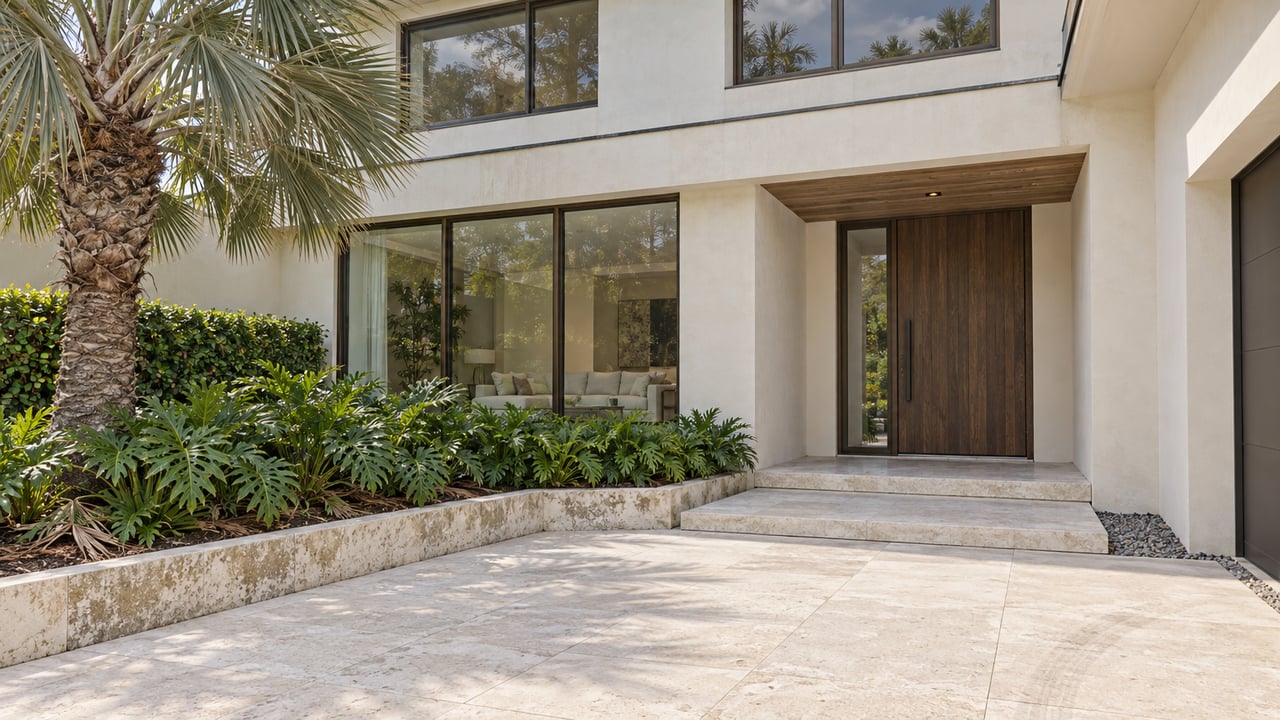
Luxury residential design often emphasizes the finished result. Natural stone, custom millwork, sculptural lighting, expansive glazing, and carefully integrated technology communicate quality through their appearance and execution.
Yet a home's true quality becomes more apparent after years of use.
A concealed plumbing connection eventually requires attention. A specialized lighting system needs a replacement component. A stone surface develops wear, a door begins to sag, or a mechanical system reaches the end of its service life. These are ordinary realities of property ownership, even in the most carefully constructed residences.
What distinguishes one home from another is not whether maintenance becomes necessary. It is how easily the property can accommodate it.
In some homes, a relatively minor repair requires removing extensive cabinetry, damaging finished walls, or dismantling a custom installation. In others, the same task can be completed through a discreet access panel or a replaceable component designed into the original assembly.
The difference is rarely visible during a property viewing. It emerges when something needs to be serviced, replaced, or upgraded.
This is the principle behind repairable luxury: the recognition that lasting quality depends not only on what a home looks like today, but also on how effectively it can be maintained tomorrow.
For luxury buyers in South Florida, this perspective is particularly relevant. Humidity, intense sunlight, heavy rainfall, coastal exposure in some locations, and continuous cooling demands can place sustained pressure on residential materials and systems.
A residence designed with maintenance and repair in mind can offer practical advantages throughout its ownership. It may reduce the disruption associated with routine servicing, preserve important architectural finishes, and make future upgrades more manageable.
Repairability is not a rejection of craftsmanship or bespoke design. It is an extension of both.
The strongest luxury homes recognize that materials will age, systems will evolve, and owners will change. They make room for these realities without sacrificing the architectural integrity that made the property desirable in the first place.
The Difference Between Premium and Enduring Quality
The term luxury is frequently associated with the quality of materials, the precision of finishes, and the presence of specialized features.
These are legitimate considerations, but they do not fully describe how a home will perform over time.
A premium material can still be difficult to maintain. A custom installation can be visually exceptional yet almost impossible to repair without damaging adjacent finishes. A sophisticated home automation system can offer convenience while creating a long-term dependency on components that may eventually become obsolete.
The distinction lies between the quality of an individual product and the quality of the overall assembly.
A well-made cabinet is valuable, but its usefulness also depends on the quality of its hinges, the accessibility of its hardware, and whether individual doors or drawer mechanisms can be replaced. A stone countertop may be exceptionally durable, but its long-term serviceability depends on the support structure, joint locations, edge detailing, and availability of suitable repair materials.
The same principle applies to building systems.
A high-performance air-conditioning unit is only one part of a functioning installation. Filters, drains, electrical connections, controls, and service clearances also affect how reliably the system can be maintained.
Repairable luxury considers these relationships from the beginning.
Instead of treating maintenance as an inconvenience to be addressed after construction, it recognizes that access, replacement, and servicing are part of the original design problem.
This approach can be especially important in architecturally distinctive homes, where unusual geometry and custom finishes may otherwise make even routine work complicated.
The objective is not to eliminate specialized materials or ambitious design. It is to ensure that the quality of the finished product is supported by a practical plan for keeping it in good condition.
Designing for Access Before Problems Occur
One of the simplest principles of repairable design is also one of the easiest to overlook: components that require maintenance should remain accessible.
Residential systems contain numerous elements that may need periodic inspection or eventual replacement. Plumbing valves, electrical connections, air-conditioning equipment, drainage components, control systems, and concealed lighting drivers are among them.
If these elements are hidden behind permanent finishes without an appropriate access strategy, maintenance can become unnecessarily disruptive.
Consider a bathroom with carefully detailed stone walls and custom cabinetry. If an important plumbing connection sits behind a fixed stone panel, a minor leak could require work far beyond the original repair.
The issue is not the use of stone or custom cabinetry. It is the absence of a practical route to the component that may eventually need attention.
An access panel placed in a discreet location can preserve the visual quality of the room while making servicing more straightforward. The panel must still provide the required clearance and comply with the relevant installation requirements, but its presence can reduce the need for destructive access.
The same principle applies to ceiling-mounted equipment, concealed lighting systems, and mechanical installations.
A beautifully finished ceiling should not make essential equipment impossible to reach. Custom millwork should not prevent a technician from accessing a valve or connection. A built-in appliance should be removable without damaging surrounding cabinetry.
These details require coordination between the architect, interior designer, contractor, and relevant trades.
They also require a change in perspective. Concealment is not automatically a sign of sophistication. In some cases, the most sophisticated solution is one that hides the equipment from view while preserving a clear path for maintenance.
A residence designed this way can remain visually refined without becoming unnecessarily difficult to own.
Materials That Can Be Maintained, Not Just Admired
Material selection plays a central role in the long-term performance of a luxury home.
Some materials can be refinished, repaired, or renewed relatively easily. Others may be difficult to match, expensive to replace, or vulnerable to damage from routine use.
The distinction is not simply between natural and manufactured materials. It depends on the material's properties, the way it is installed, the conditions it experiences, and the availability of appropriate repair methods.
Natural stone, for example, may be suitable for certain forms of restoration or localized repair, depending on the stone type, finish, damage, and original installation. However, replacing a damaged slab can be complicated if the original material is no longer available or if its color and veining vary significantly.
Timber may be repairable through refinishing or replacement of individual components, although the outcome depends on the species, finish, and extent of damage.
Some metal finishes can be restored or refinished, while others may be difficult to reproduce consistently once a manufacturer discontinues a particular coating.
The relevant question is not whether a material can be damaged. It is whether a realistic path exists to maintain or restore it.
For luxury residences, this consideration should influence the selection of flooring, cabinetry, wall finishes, exterior cladding, hardware, and other frequently used elements.
It may also be sensible to retain samples, product specifications, finish schedules, and supplier details during construction. These records can help owners identify compatible replacement materials years later.
A material that ages gracefully can contribute to a home's character. A material that can be repaired without extensive demolition can also reduce waste and disruption.
The most thoughtful specifications consider both qualities.
Patina, Wear, and the Meaning of Longevity
Not every sign of age represents a failure.
Some materials develop a patina that contributes to their visual character. Timber may deepen in color, certain metals may change in appearance, and natural stone may acquire subtle marks associated with use.
Whether these changes are desirable depends on the material, the architectural intent, and the owner's preferences.
The distinction between patina and deterioration is important.
Patina is generally an expected or acceptable change in appearance. Deterioration may involve loss of performance, structural damage, moisture intrusion, or a condition that requires intervention.
A well-designed home allows materials to age in ways that remain compatible with their intended use.
For example, a material selected for its ability to develop character may be appropriate in a living area but less suitable for a surface that requires a highly consistent appearance. A finish that performs well in a dry interior may not be appropriate for a location exposed to persistent moisture.
Maintenance expectations should therefore be considered during material selection rather than after the first signs of wear appear.
Luxury does not require every surface to remain permanently untouched. In many cases, a home feels more authentic when its materials develop character without losing their functionality.
The challenge is to distinguish desirable aging from avoidable damage.
That distinction becomes easier when owners understand the properties of their materials and follow appropriate care requirements.
Why Standardized Components Can Be an Advantage
Custom design is often a defining feature of luxury residential architecture. Bespoke dimensions, integrated furniture, and unique detailing can create spaces that respond closely to the owner's needs.
However, customization can introduce complications when every component is unique.
A proprietary hinge, unusual lighting driver, custom control module, or one-off mechanical component may be difficult to replace if the original supplier no longer supports it.
Standardized components can offer an alternative.
Using widely supported hardware, replaceable fittings, and established equipment platforms may improve access to replacement parts and qualified technicians. This does not mean every component should be generic. It means that customization should be concentrated where it provides meaningful architectural or functional value.
For example, a custom cabinet can use distinctive proportions and finishes while incorporating replaceable hinges and drawer runners from a reputable manufacturer. A bespoke lighting feature can use a carefully designed housing while retaining accessible, replaceable electrical components.
The exterior appearance remains tailored to the home, while the underlying parts are easier to maintain.
The same principle applies to mechanical and control systems. A thoughtfully specified installation can deliver sophisticated performance without depending unnecessarily on obscure components or unsupported technologies.
The appropriate balance depends on the project.
A highly specialized residence may require unique elements, but the owner should understand which components are difficult to replace and what alternatives exist if the original supplier becomes unavailable.
A luxury home does not need to avoid customization. It needs to distinguish between meaningful customization and complexity that creates no lasting benefit.
The Hidden Cost of Concealed Systems
Concealed systems can produce exceptionally clean interiors.
Flush doors, integrated appliances, hidden lighting, concealed drainage, and discreet mechanical installations help reduce visual clutter and reinforce a controlled architectural language.
However, concealment can become expensive when access has not been planned carefully.
A concealed lighting driver may be easy to hide but difficult to replace. A plumbing connection behind fixed cabinetry may require substantial dismantling. A drainage system concealed within a finished ceiling may be difficult to inspect before a leak becomes visible.
The problem is not concealment itself. It is concealment without serviceability.
A well-designed installation should allow equipment to remain visually unobtrusive while preserving the ability to inspect, repair, and replace it.
This may involve removable panels, accessible service zones, carefully located inspection openings, or a layout that separates replaceable components from permanent architectural finishes.
These measures should be coordinated with the room's proportions and material palette so that they do not compromise the intended appearance.
They should also be documented.
Future owners and technicians may not know where concealed components are located or how they can be accessed. Accurate drawings and maintenance records can reduce unnecessary investigation and prevent avoidable damage.
The most successful concealed systems are not simply invisible. They are deliberately integrated.
That distinction can determine whether a home remains straightforward to maintain or becomes increasingly difficult to service as it ages.
South Florida and the Importance of Repairable Building Envelopes
In South Florida, repairability extends beyond interior finishes.
The building envelope must manage moisture, heat, rainfall, and environmental exposure. Roofs, windows, exterior doors, sealants, waterproofing assemblies, and drainage details all contribute to the property's long-term performance.
These elements are particularly important because problems may remain concealed until they begin affecting interior finishes or structural components.
A window assembly, for example, depends on more than the quality of the glass. Frames, seals, flashing, installation details, and the surrounding wall construction all influence its performance.
If a component fails, the repair should ideally be possible without unnecessary damage to adjacent finishes.
The same consideration applies to roof penetrations, balconies, terraces, and other areas where water management depends on carefully coordinated details.
Some waterproofing assemblies are more difficult to access than others. Their design should account for inspection, maintenance, and the possibility of future replacement.
In certain cases, a localized repair may be appropriate. In others, the condition of the assembly may require more extensive work. The correct approach depends on the construction, the cause of the problem, and professional assessment.
The important point is that the building envelope should not be treated as a finished surface alone.
It is a working system that must continue to manage environmental exposure over time.
For buyers evaluating South Florida luxury properties, documentation of roof repairs, window replacements, waterproofing work, and other envelope-related maintenance can provide useful insight into the property's condition.
A home that has been maintained and repaired systematically may offer greater clarity about future ownership requirements than one with an impressive appearance but limited service history.
Repairability in Plumbing and Bathrooms
Bathrooms are among the most demanding areas of a residence because they combine water, humidity, plumbing connections, electrical components, and carefully finished surfaces.
They are also spaces where repairability can be compromised by design decisions made primarily for appearance.
Wall-mounted fixtures, concealed cisterns, integrated shower controls, and custom stone installations can create a refined interior. However, each system should be selected and installed with a clear understanding of how its serviceable components can be reached.
A concealed toilet cistern, for example, should have an appropriate service opening. Shower valves and other plumbing components need access consistent with the installation requirements. Waterproofing must remain continuous and properly detailed around penetrations.
A beautifully finished bathroom is not necessarily easy to maintain, but it should not make routine servicing needlessly destructive.
Material choices also affect repair options.
Large-format stone slabs can produce a seamless appearance, yet replacing one damaged piece may be difficult if the original material is unavailable. Smaller modular elements may be easier to replace individually, although the visual result depends on the design.
Grout, sealants, and other joints may require periodic attention according to their material and exposure conditions.
The owner should understand which elements require regular care and which conditions may indicate a more serious problem.
For luxury buyers, the relevant question is whether the bathroom's design balances visual refinement with practical access to the systems behind it.
That balance is especially important in properties where custom finishes are expensive or difficult to reproduce.
Kitchens and the Economics of Replaceable Components
The kitchen combines multiple systems within a relatively compact area. Appliances, plumbing, electrical connections, ventilation, cabinetry, lighting, and work surfaces must function together.
When the design prioritizes appearance without considering replacement, future upgrades can become complicated.
Integrated appliances are a common example. They can preserve a consistent cabinet front and create a visually unified interior. However, the appliance dimensions, ventilation requirements, access clearances, and availability of replacement models should be considered before the cabinetry is finalized.
A future appliance may not match the original dimensions or hinge configuration. If the cabinetry allows no adjustment, replacing the unit may require modifications to surrounding panels or cabinets.
The same principle applies to refrigeration systems, cooktops, ovens, and other built-in equipment.
Cabinet hardware is another consideration. Hinges, drawer runners, lift mechanisms, and specialized fittings experience repeated use and may eventually require adjustment or replacement.
Selecting components with established support and keeping product information can make these tasks more manageable.
Countertops and backsplashes should also be evaluated in relation to the possibility of future repair. A surface that extends continuously across several elements may be visually striking but difficult to replace in sections.
The objective is not to sacrifice a clean design for convenience. It is to ensure that the design can accommodate normal equipment replacement and material maintenance without unnecessary reconstruction.
A well-planned kitchen remains visually coherent while allowing its working components to evolve.
Technology That Can Be Updated Without Rebuilding the Home
Technology is one of the areas where repairability becomes especially relevant.
Luxury residences may include integrated lighting controls, automated shading, security systems, climate management, entertainment equipment, and other connected features.
These systems can improve convenience and create a more responsive living environment. However, technology evolves more quickly than the architectural components that house it.
A control platform that is advanced at installation may eventually become unsupported. A proprietary device may no longer be available, or a replacement component may require a broader system upgrade.
The design should account for this possibility.
Where practical, technology infrastructure should allow individual components to be replaced without requiring the entire installation to be rebuilt. Accessible wiring pathways, organized equipment locations, clear labeling, and documented system architecture can support future maintenance.
The choice of platform also matters.
Owners should understand the availability of technical support, the expected maintenance requirements, and whether the system depends on ongoing subscriptions or a particular supplier.
A highly integrated system may be appropriate for a complex residence, but its benefits should be weighed against its long-term dependencies.
The most adaptable installations distinguish between permanent infrastructure and replaceable technology.
Cabling, conduits, and equipment spaces can remain useful even as individual devices change. This allows the residence to evolve without requiring major alterations to walls, ceilings, or custom millwork.
The goal is not to predict every future technology. It is to make future change less disruptive.
Repairability and the Ownership Budget
A home's purchase price does not fully describe the cost of owning it.
Maintenance, repairs, system replacements, and periodic upgrades all contribute to the long-term financial commitment. The size of these expenses depends on the property's construction, age, environmental exposure, quality of maintenance, and the owner's expectations.
Repairable design can help make some of these costs more manageable.
If a component can be accessed and replaced independently, the owner may avoid the additional expense of dismantling adjacent assemblies. If a system uses supported replacement parts, the owner may have more options when servicing becomes necessary.
However, repairability does not guarantee low maintenance costs.
A high-quality roofing system, sophisticated mechanical installation, or extensive custom interior may still require significant expenditure over its service life. Some materials also require specialized contractors or particular care procedures.
The benefit is that maintenance can be planned with greater clarity and may involve less unnecessary disruption.
Owners should consider the likely maintenance requirements of major systems when evaluating a property. These include the roof, cooling equipment, windows and doors, plumbing, electrical systems, exterior finishes, and any specialized installations.
Records of previous repairs can help establish a more realistic picture of the property's condition.
For custom homes, the maintenance strategy should ideally be established during design and construction. Product specifications, warranties, maintenance schedules, and supplier information can provide a useful foundation for future ownership.
For existing properties, buyers may need to assemble this information through inspections, seller documentation, and specialist assessments.
The financial advantage of repairable design is not always visible in the initial purchase or construction price. It often becomes clearer through the property's life cycle.
The Environmental Case for Repair Before Replacement
Repairability can also influence the environmental impact of a luxury residence.
Replacing an entire installation when only one component has failed may consume more materials and generate more waste than a suitable localized repair. The environmental consequences depend on the materials involved, the cause of the failure, and the feasibility of restoring the original assembly.
Designing for repair can preserve usable materials and reduce the need for premature replacement.
This is particularly relevant for large architectural elements such as stone cladding, timber flooring, cabinetry, windows, and mechanical systems.
However, repair should not be treated as an objective in itself when the underlying system has become unsafe, unreliable, or unsuitable for its intended purpose.
A damaged component may be repairable in theory but economically or technically better replaced. A building assembly with recurring failures may require a broader correction rather than repeated localized interventions.
The appropriate decision considers performance, safety, durability, cost, and environmental consequences together.
Materials that can be refinished or repaired may also support a more measured approach to renovation. Rather than removing every surface during an interior update, owners may preserve sound elements and focus on the components that genuinely require change.
This can maintain architectural continuity while reducing unnecessary demolition.
Repairable luxury therefore aligns with a broader principle of responsible ownership: retain what continues to perform well, maintain what can be maintained effectively, and replace what no longer meets the home's needs.
Documentation as Part of the Finished Product
A well-designed home should come with more than keys and a set of warranties.
Its long-term usefulness also depends on the information that allows future owners and technicians to understand how it was constructed and how its systems should be maintained.
Relevant documentation may include architectural and engineering drawings, product schedules, finish specifications, equipment manuals, warranties, maintenance instructions, and records of permitted alterations.
Photographs taken before walls and ceilings are closed can also help identify concealed plumbing, electrical routes, and other components.
This information can be particularly valuable in residences with extensive custom work.
Without accurate records, a future repair may require exploratory demolition simply to locate a pipe, determine a finish specification, or identify the correct replacement part.
Documentation can also help preserve consistency during renovation. Knowing the original paint specification, stone source, cabinet finish, or hardware manufacturer may improve the likelihood of obtaining compatible materials.
For technology systems, a clear record of equipment models, network architecture, configuration, and service contacts can reduce dependence on the original installer.
The information should be organized so that it remains accessible to the owner and relevant professionals.
For buyers purchasing an existing luxury property, the availability of these records can be a useful indicator of how systematically the home has been managed. It is not a substitute for inspection, but it can make the property's history easier to understand.
Documentation is rarely the most visible part of luxury construction. Yet it can become one of the most useful assets during long-term ownership.
What Buyers Should Evaluate During a Property Viewing
Repairability is difficult to judge from appearance alone, but buyers can look for indicators that warrant further investigation.
Access to essential systems: Are mechanical equipment, plumbing service points, electrical panels, and other maintainable components accessible without removing permanent finishes?
Condition of frequently used elements: Do doors, windows, drawers, fixtures, and moving components operate smoothly? Are there signs of repeated adjustments or improvised repairs?
Evidence of water damage: Are there stains, damaged finishes, persistent odors, or visible deterioration around windows, bathrooms, ceilings, and other vulnerable areas?
Availability of records: Are equipment manuals, maintenance histories, warranties, finish schedules, and renovation documents available?
Replacement flexibility: Do built-in appliances, lighting systems, and other specialized installations appear dependent on unusual dimensions or discontinued components?
Material consistency: Are there visible repairs that suggest difficulty matching finishes, or have previous repairs been integrated successfully?
Serviceability of technology: Can the owner identify the equipment and obtain qualified support if a control system, network component, or automated feature fails?
Evidence of systematic maintenance: Have major systems been serviced according to appropriate schedules, and are repairs documented?
These observations should inform due diligence rather than replace professional assessment.
A qualified inspector or specialist may be needed to determine whether an installation is functioning correctly and whether any apparent concern requires further investigation.
The purpose is to understand not only the property's current condition, but also how manageable its future maintenance is likely to be.
MMGLuxury Perspective
Repairability offers a useful way to evaluate luxury homes beyond their immediate visual appeal.
A residence may contain exceptional materials and sophisticated systems, but its long-term quality also depends on whether those elements can be maintained without unnecessary damage or disruption.
For South Florida buyers, the issue is especially relevant to the building envelope, cooling systems, plumbing, glazing, and other components exposed to demanding environmental conditions. The ability to inspect, service, and replace these systems can influence the practical experience of ownership.
For buyers evaluating existing properties, maintenance records and accessible service infrastructure can provide valuable context. For those commissioning custom homes, repairability should be considered during design rather than left to contractors to resolve after the architecture is finalized.
The principle is not to eliminate bespoke details or choose every material based on ease of replacement. It is to apply customization where it adds meaningful value while ensuring that essential systems remain serviceable.
A luxury residence should be designed for the life it will lead after completion.
That means considering not only how the home will look when it is new, but also how it will respond to wear, technological change, repairs, and the evolving needs of its owners.
Final Thought
The most durable expression of luxury may be the ability to maintain quality without repeatedly rebuilding it.
Materials will age. Equipment will eventually need replacement. Technology will change, and owners will make new decisions about how their homes should function.
These realities do not diminish the value of exceptional architecture. They make thoughtful design more important.
A repairable home anticipates the ordinary demands of ownership. It provides access to essential systems, uses components that can be maintained or replaced where practical, and preserves the information needed to care for the property over time.
This approach can protect architectural finishes, reduce avoidable disruption, and make future improvements more manageable.
For luxury buyers, it offers another way to distinguish appearance from enduring quality.
The most successful residences are not those that never require attention. They are those designed so that necessary attention can be delivered intelligently, without compromising the qualities that made the home worth owning.
That is repairable luxury: a home built not only to make an impression at completion, but to remain worthy of that impression for years to come.
#MMGLuxury #LuxuryRealEstate #LuxuryHomeDesign #ResidentialArchitecture #CustomHomeDesign #LuxuryInteriors #SouthFloridaRealEstate #SustainableDesign #HomeMaintenance #ArchitecturalQuality