Luxury real estate has always been influenced by architecture. But for decades, the relationship was often secondary to the fundamentals of the property itself: location, scale, views, finishes, amenities, and the prestige of the address.
That hierarchy is changing.
At the highest end of the market, a residence is increasingly being evaluated not only for what it offers physically, but for who designed it, how it was conceived, what architectural tradition it belongs to, and whether its design has a lasting identity.
This is the emergence of architectural pedigree as a meaningful dimension of luxury real estate.
The concept is familiar in other collectible markets. A watch can derive significance from its maker. A piece of furniture can become more valuable because of its designer. A painting carries a different level of cultural importance when its provenance is established. Automobiles, jewelry, fashion and even wine are evaluated partly through authorship and lineage.
Residential property has traditionally been harder to place within that framework because a house is both an object and a place to live.
Yet that is precisely what makes architectural pedigree interesting.
A well-designed residence can become more than an expensive structure. It can become a recognizable work of architecture—one whose identity survives changing fashions, ownership, renovations and market cycles.
For luxury buyers, that distinction matters.
From Expensive House to Designed Residence
There is a fundamental difference between a house that is expensive and a residence that is architecturally significant.
Cost can be created through size, materials, land value, construction quality, amenities and location. Architectural significance comes from a different combination of elements: proportion, composition, context, originality, craftsmanship and design intent.
A large residence may contain imported stone, custom millwork, elaborate landscaping and extensive technology without possessing a meaningful architectural identity.
Conversely, a relatively restrained property can command considerable attention because its architecture is coherent, distinctive and deeply connected to its setting.
That distinction is becoming more important as luxury construction becomes increasingly capable of producing almost anything.
When nearly every material, technology and amenity can be customized, authorship becomes a differentiator.
The question is no longer simply what the house contains.
It becomes what the house represents.
The Architect Becomes Part of the Story
In conventional residential marketing, architectural credits can appear almost incidental.
The architect's name may sit near the bottom of a listing description, alongside the interior designer, landscape architect and builder.
For architecturally significant properties, that hierarchy can reverse.
The architect becomes part of the property's story.
A residence designed by a recognized architect carries a layer of information that cannot be easily reproduced by another property.
The architectural language may connect the home to a larger body of work. The designer's approach to light, proportion, materials, circulation, landscape or indoor-outdoor relationships may be visible throughout the residence.
This creates something increasingly valuable in luxury markets:
a recognizable point of view.
A home with a strong point of view does not need to compete solely on features.
Its identity becomes part of its appeal.
Architectural Pedigree Is Not the Same as Celebrity
There is an important distinction between architectural pedigree and celebrity branding.
A famous name can attract attention, but the presence of a recognizable architect does not automatically make a residence exceptional.
Architectural pedigree is ultimately about the relationship between authorship and execution.
Was the architect genuinely involved?
Was the design completed as intended?
Were the materials and proportions respected?
Was the landscape conceived as part of the architecture?
Has the property been altered beyond recognition?
Has the residence retained its original character?
These questions matter because architectural value can be weakened when later modifications erase the qualities that made the property distinctive.
A famous architect's name on a brochure is not enough.
The architecture has to remain legible.
The Importance of Design Lineage
Architecture rarely exists in isolation.
The strongest residences often have a clear relationship to a broader design tradition.
A South Florida residence might draw from regional modernism, tropical architecture, Mediterranean traditions, Art Deco influences, contemporary minimalism or a more deeply contextual approach to climate and landscape.
That lineage gives the property intellectual depth.
It explains why certain proportions were chosen.
Why certain materials appear.
Why windows are positioned in particular ways.
Why the house opens toward a garden rather than a street.
Why the landscape is integrated into the structure.
Why shade, breeze and water become architectural elements rather than decorative additions.
Design lineage can turn a residence from a collection of expensive decisions into a coherent work.
South Florida Has Its Own Architectural Vocabulary
South Florida is particularly interesting because architecture here has always had to negotiate a powerful environmental context.
Sun, heat, humidity, storms, vegetation, water and indoor-outdoor living influence residential design in ways that are difficult to separate from the region itself.
The best properties do not simply place a generic luxury house in South Florida.
They respond to South Florida.
That response can take many forms.
Deep overhangs.
Protected courtyards.
Shaded terraces.
Large openings carefully oriented toward views.
Materials selected for durability.
Landscaping that creates layers between architecture and surroundings.
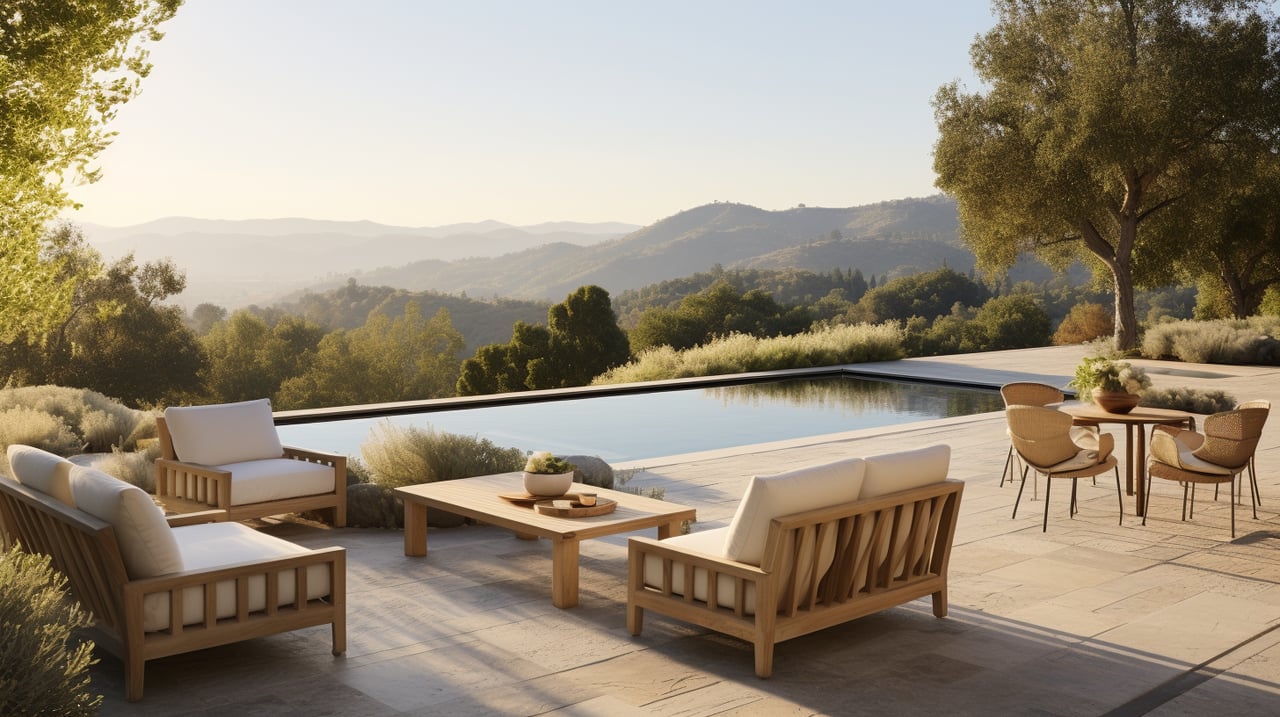
Pools integrated into the composition rather than added afterward.
Outdoor rooms that function as genuine extensions of the interior.
These decisions can become part of a home's architectural identity.
For buyers evaluating premium property in South Florida, understanding that distinction can be more valuable than simply counting bedrooms or interior square footage.
Architecture Can Create Emotional Recognition
There is also a psychological dimension to architectural pedigree.
Some properties are immediately recognizable even before the address is known.
Not because they are extravagant, but because their design has a consistent visual language.
The roofline.
The relationship between solid walls and openings.
The geometry of the courtyard.
The way light enters the interior.
The connection between the pool and the living spaces.
The framing of a particular tree or body of water.
These elements create recognition.
And recognition matters in markets where buyers encounter a large number of visually impressive properties.
A residence with architectural character can remain memorable after dozens of listings have blurred together.
The Luxury of Having a Point of View
Much of contemporary luxury construction is designed around maximizing broad appeal.
That strategy is understandable.
Developers and sellers often want a property to appeal to the largest possible pool of high-net-worth buyers.
But maximum appeal can sometimes produce visual neutrality.
The safest architecture is not necessarily the most memorable.
A residence designed around a strong architectural idea may appeal to fewer people—but appeal much more deeply to the right person.
That is an important distinction.
Luxury markets do not operate exclusively on volume.
At the highest end, the buyer may be searching for something specific enough that conventional market logic becomes less relevant.
They may not want the most universally appealing house.
They may want the house that feels unmistakably itself.
When Architecture Becomes Collectible
This is where luxury real estate begins to resemble other collectible categories.
Collectible objects typically combine several characteristics:
- identifiable authorship
- rarity
- quality
- cultural relevance
- provenance
- condition
- scarcity
- a recognizable point of view
Architecturally significant residences can share many of these characteristics.
There may be only one residence designed for a particular site.
Its proportions cannot simply be reproduced elsewhere because the relationship between architecture, land, views and orientation is unique.
Its design may represent a particular period in an architect's career.
Its materials may reflect a particular design philosophy.
Its history may include notable owners or significant restoration work.
Over time, those details can contribute to a property's cultural identity.
Provenance Becomes More Valuable With Time
Provenance is already central to art and collectible design.
In real estate, the concept is broader.
It can include the architect, builder, original owner, construction history, renovation history, design documentation and relationship to the surrounding neighborhood.
For an architecturally important residence, these details can help establish what the property actually is.
A home that has been thoughtfully maintained for decades may possess a stronger story than a heavily renovated residence that has lost most of its original character.
Documentation can therefore become surprisingly important.
Original plans.
Architectural drawings.
Construction photographs.
Material records.
Historical photographs.
Renovation documentation.
Landscape plans.
These materials help preserve the intellectual history of a residence.
They are not merely archival curiosities.
They can become part of the property's provenance.
The Renovation Question
Architectural pedigree also changes the way renovation should be approached.
A typical luxury residence may be marketed around modernization.
New kitchen.
New bathrooms.
Updated lighting.
Contemporary finishes.
Smart-home systems.
Fresh landscaping.
But architecturally significant properties require a more nuanced approach.
The goal is not always to make the home look new.
Sometimes the goal is to make the home function better without erasing what made it important.
That can require restraint.
A renovation might restore original materials rather than replace them.
Improve infrastructure without changing visible architectural elements.
Upgrade technology discreetly.
Rework circulation only where necessary.
Restore landscape relationships that have deteriorated.
The most successful intervention may be the one that future owners barely notice.
The Difference Between Preservation and Stagnation
Respecting architectural identity does not mean freezing a house in time.
A residence still has to work for contemporary life.
Families change.
Technology changes.
Expectations change.
Building standards change.
Climate considerations change.
The challenge is to distinguish between adaptation and erasure.
A thoughtful renovation can introduce contemporary functionality while maintaining the architectural logic of the original design.
That approach is particularly relevant in luxury markets because buyers at this level are often purchasing both present-day livability and long-term cultural value.
The house should not become a museum.
It should remain a residence.
But it should also retain its identity.
The Landscape Is Part of the Architecture
One of the most overlooked components of architectural pedigree is landscape design.
In exceptional residences, the garden is not simply what surrounds the house.
It is part of the composition.
Trees may frame architectural views.
Planting may create privacy.
Water may extend the visual geometry of the structure.
Paths may establish the sequence of arrival.
Courtyards may control light and temperature.
Outdoor rooms may determine how the property is experienced throughout the day.
This is especially important in South Florida, where the distinction between interior and exterior can be unusually fluid.
A residence with strong architectural pedigree often treats the landscape as an equal design discipline.
The Value of Originality in an Era of Visual Homogenization
Luxury real estate is experiencing an interesting paradox.
Technology has expanded design possibilities, but digital platforms have also created a powerful visual convergence.
Buyers, developers, designers and architects can see the same international projects, the same furniture, the same materials and the same hospitality-inspired interiors.
As a result, luxury properties in very different cities can begin to resemble one another.
Miami can look like Los Angeles.
Los Angeles can look like Dubai.
Dubai can look like Singapore.
The architecture may be beautiful, but the sense of place can become diluted.
Against that backdrop, originality becomes more valuable.
A residence that could exist nowhere else has a different cultural position from one that could be reproduced almost anywhere.
The Return of Contextual Luxury
The next phase of luxury architecture may therefore be less about visual spectacle and more about context.
Context can mean climate.
Landscape.
Local materials.
Regional history.
Neighborhood character.
Water.
Light.
Topography.
Culture.
Architecture becomes stronger when it responds to these conditions instead of attempting to overpower them.
For buyers, contextual design can also create a stronger connection between the property and its location.
The house feels as though it belongs there.
That sense of belonging is difficult to manufacture after the fact.
Architectural Pedigree and Resale
Architecture does not guarantee financial appreciation.
That distinction is important.
Real estate value remains influenced by land, location, supply, demand, economic conditions, financing, taxes, insurance and broader market cycles.
But architectural pedigree can affect the depth and character of demand for certain properties.
A generic luxury residence competes primarily against other luxury residences.
A genuinely distinctive architectural property may compete in a different category.
Its buyer pool may include people specifically searching for architectural significance, design history, craftsmanship or cultural identity.
That can change the conversation around the property.
Instead of asking only, "What else can I buy for this price?"
The buyer may be asking, "Where else can I find something like this?"
That is a materially different form of scarcity.
The Architecture of a Specific Site Cannot Be Replicated
One of the strongest arguments for architectural pedigree is that architecture is inseparable from place.
A building designed for one parcel cannot simply be transferred to another.
The views change.
The orientation changes.
The trees change.
The street changes.
The relationship to water changes.
The light changes.
The neighboring structures change.
The experience changes.
This means a truly site-specific residence can possess an inherent uniqueness that cannot be replicated by simply commissioning another expensive house.
The architecture and the land become one proposition.
A Different Kind of Status
For decades, luxury property status was often communicated through visibility.
The larger house.
The more recognizable address.
The more elaborate entrance.
The greater number of amenities.
The newest construction.
Architectural pedigree introduces a quieter form of distinction.
It appeals to people who recognize design rather than simply display.
That does not make the property less luxurious.
It makes the luxury more legible to a different audience.
A buyer may care less about whether every guest knows the architect's name and more about whether the house demonstrates a level of design intelligence worth preserving.
This is a form of cultural capital rather than conventional conspicuous consumption.
Why the Architect's Reputation Matters—but Isn't Everything
A recognized architect can create an immediate signal of quality.
But the market should be careful not to reduce architectural value to name recognition.
Some of the most compelling residences may have been designed by architects who never became internationally famous.
Regional architects can produce exceptional work.
Boutique practices can create highly original residences.
Landscape architects and interior designers can contribute equally important layers of authorship.
The real question is not simply whether a name is famous.
It is whether the design has integrity, distinction and lasting relevance.
That is a much more demanding standard.
The Role of the Luxury Advisor
Architecturally significant property requires a different kind of conversation from conventional listing analysis.
The buyer needs to understand more than square footage and amenities.
They may need context around:
- architectural authorship
- original design intent
- renovation history
- landscape architecture
- materials and craftsmanship
- preservation considerations
- alterations to the original design
- neighborhood context
- comparable architecturally significant properties
- documentation and provenance
This is where specialized luxury representation becomes particularly valuable.
The advisor is not simply presenting a house.
They are helping the buyer understand what kind of asset the house actually is.
Architectural Intelligence as Part of Due Diligence
For a high-value architectural residence, due diligence should extend beyond the conventional checklist.
Buyers may want to investigate the property's design history.
Who designed it?
When was it built?
Was it published?
Was it recognized by architectural organizations?
Were later additions approved by the original architect?
Which elements are original?
Which have been replaced?
Has the landscaping changed?
Are there historical plans or photographs?
Was the property substantially altered during previous ownership?
These questions do not necessarily determine value on their own.
But together, they create a much clearer picture of the residence's identity.
The Growing Importance of Design Literacy
Luxury buyers are becoming more design literate.
Global travel exposes affluent households to exceptional hotels, restaurants, museums, private residences and cultural institutions.
Digital platforms provide unprecedented access to architecture and interiors.
Collectors increasingly understand provenance.
Younger generations of wealth are often comfortable discussing designers, materials, architecture and craftsmanship in ways that previous generations may have reserved for art or automobiles.
This creates a more informed luxury buyer.
And an informed buyer is more likely to recognize the difference between expensive decoration and genuine design.
The House as a Cultural Object
At the highest level, architecture can give residential property a cultural dimension.
The residence becomes a record of a particular period.
A reflection of a particular architect.
A response to a particular landscape.
A demonstration of a particular design philosophy.
It becomes something that can be studied, documented and remembered.
That does not mean every luxury house needs to become a landmark.
Most will not.
But the possibility that a residence could develop cultural significance changes how it should be understood.
The property is no longer simply a financial transaction.
It is also an acquisition of design history.
What Buyers Should Look For
For buyers interested in architecturally distinguished property, several questions can provide a useful framework.
Is the architecture coherent?
Does the design feel intentional from the entrance through the private spaces and into the landscape?
Is the home specific to its location?
Could it exist anywhere, or does it genuinely respond to its environment?
Is the architect's contribution meaningful?
Was the architect actually responsible for the core design?
Has the original vision survived?
Later alterations can either strengthen or weaken architectural identity.
Is the craftsmanship consistent with the design?
Strong architectural ideas require strong execution.
Does the property have documentation?
Drawings, photographs and records can help establish provenance.
Will the architecture remain relevant?
Trend-driven design can age quickly. Strong proportion and thoughtful materiality tend to have longer lives.
These questions shift the buyer's perspective from decoration toward authorship.
Architecture as a Long-Term Conversation
The most interesting luxury residences often reveal themselves gradually.
A dramatic house can impress immediately.
A great house can become more interesting with time.
The longer an owner lives there, the more apparent the relationship between light, landscape, circulation, materials and daily life becomes.
That quality is difficult to capture in a listing photograph.
It is experienced through repetition.
Morning light entering a particular room.
A garden becoming more established.
Materials developing patina.
The view changing with the seasons.
A favorite route through the house becoming instinctive.
Architecture becomes valuable not only because it looks good, but because it continues to provide discoveries.
The Future of Luxury Residential Design
The next generation of high-end residential architecture is unlikely to abandon technology, wellness, security, sustainability or sophisticated amenities.
Instead, those elements may become increasingly integrated into stronger architectural concepts.
Technology will disappear into the design.
Environmental performance will become part of material and orientation decisions.
Landscape will become more important.
Indoor and outdoor spaces will become more deliberately connected.
Private amenities will be designed around actual use rather than simply accumulating features.
And architectural identity may become increasingly important as luxury construction becomes more globally standardized.
In other words, the future luxury residence may not necessarily be more elaborate.
It may be more authored.
What Architectural Pedigree Really Adds
The greatest value of architectural pedigree is not simply prestige.
It is differentiation.
A recognized design philosophy can give a property an identity that survives market cycles.
A thoughtful relationship to the site can make the residence difficult to reproduce.
Strong craftsmanship can support longevity.
Documented provenance can preserve the property's story.
And architectural coherence can transform a collection of rooms into a complete experience.
These qualities cannot be added as easily as a new appliance, upgraded finish or additional amenity.
They have to be conceived from the beginning.
Or, in the case of older properties, protected through careful stewardship.
MMGLuxury Perspective
At MMGLuxury, architectural pedigree represents an important evolution in how exceptional residential property can be evaluated.
The luxury market is filled with residences that compete through size, specification and amenity packages. Those characteristics matter, but they do not tell the entire story.
Some properties deserve a closer reading.
Their value lies in the relationship between architecture and land, between design and lifestyle, between craftsmanship and longevity.
For buyers seeking exceptional property in South Florida, understanding that distinction can lead to a more sophisticated acquisition strategy.
The most compelling residence may not necessarily be the newest.
It may not have the longest list of amenities.
It may not be the most visually extravagant.
It may be the property with the strongest architectural idea—and the clearest evidence that the idea has been preserved.
That is where architectural pedigree becomes meaningful.
Not as a marketing label, but as a way of understanding what makes a residence genuinely difficult to replace.
Final Thought
Luxury real estate has always been about ownership of something difficult to obtain.
For one generation, that may have meant land.
For another, location.
For another, privacy, waterfront access or extraordinary scale.
Increasingly, the rarest quality may be authorship.
A residence conceived with intention, executed with discipline and connected meaningfully to its surroundings carries something that cannot simply be ordered, renovated or reproduced.
Its architecture becomes part of its provenance.
Its provenance becomes part of its identity.
And over time, identity can become one of the most enduring forms of luxury.
The most valuable house in a market is not always the one that announces itself most loudly.
Sometimes, it is the one that has something worth recognizing.
#MMGLuxury #LuxuryRealEstate #SouthFloridaRealEstate #LuxuryHomes #LuxuryArchitecture #ArchitectDesignedHomes #ArchitecturalPedigree #MiamiLuxuryRealEstate #ResidentialArchitecture #LuxuryProperty #RealEstateIntelligence #ArchitecturalDesign #PropertyInvestment #LuxuryLifestyle #SouthFloridaLuxury