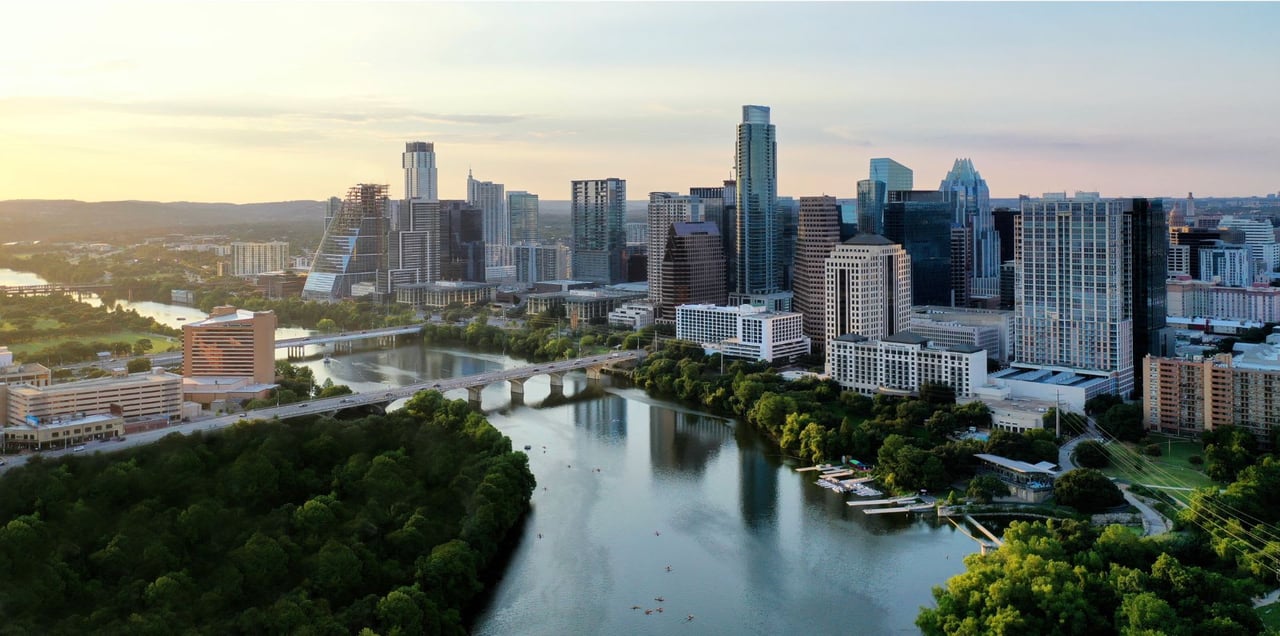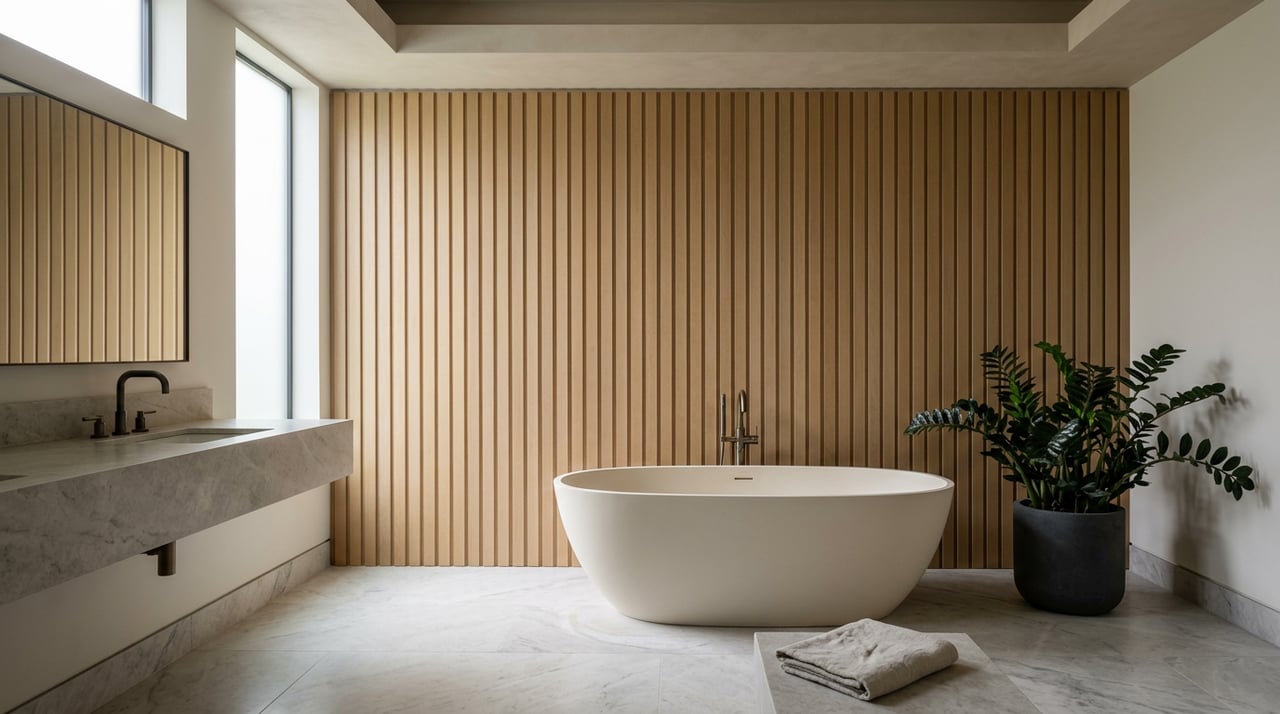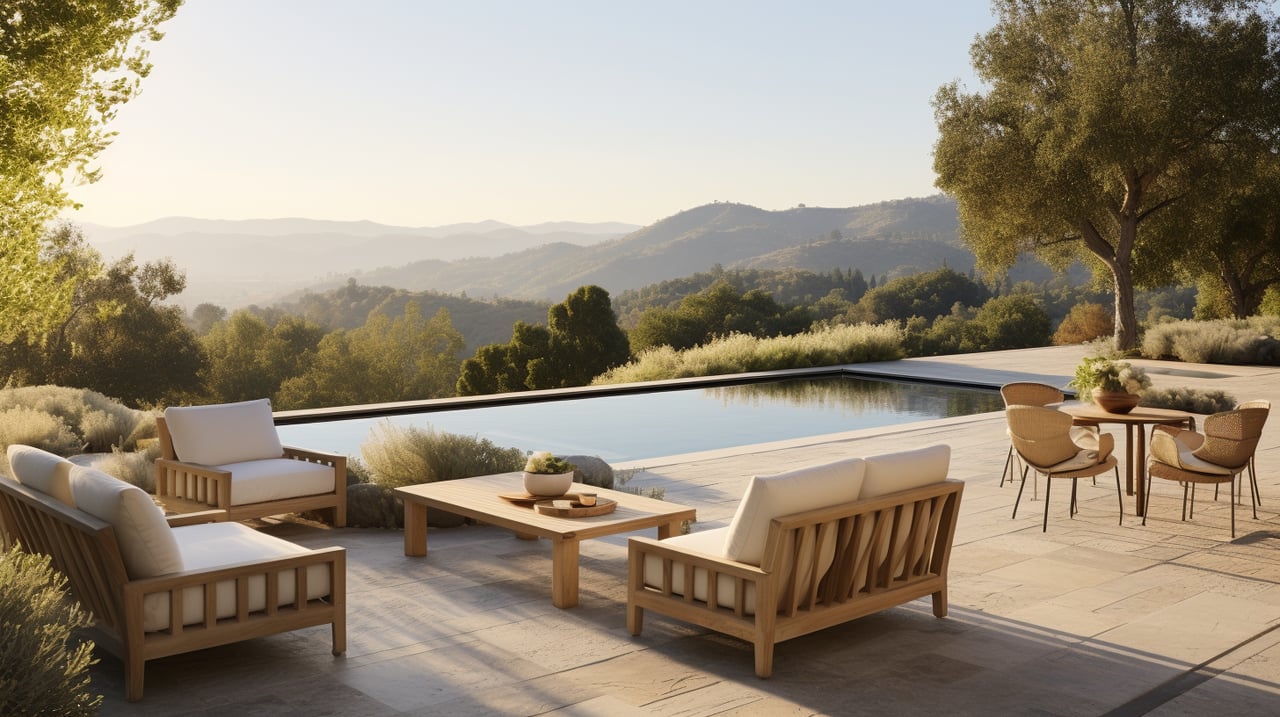
A luxury home can photograph perfectly.
The architecture can be exceptional.
The waterfront can be spectacular.
The landscaping can be mature.
The interiors can be flawless.
And yet there may be an important part of the property that never appears in the listing photographs.
How does it perform when conditions become difficult?
That question is becoming harder to separate from luxury real estate in South Florida.
For years, conversations about exceptional homes centered primarily on aesthetics and lifestyle.
The view.
The neighborhood.
The architecture.
The entertaining spaces.
The dock.
The pool.
The kitchen.
The primary suite.
But the highest-value properties are physical assets exposed to the same environmental realities as every other building.
Heat.
Heavy rainfall.
Wind.
Humidity.
Storm events.
Salt air.
Flooding risk.
Drainage.
Power interruptions.
Maintenance demands.
These conditions do not make luxury property less desirable.
They make resilience more relevant.
The sophisticated buyer is therefore beginning to ask a different set of questions.
Not simply:
"How beautiful is this property?"
But:
"How well does this property perform?"
That is a much more consequential question.
Luxury Has Always Included Protection
Historically, affluent households have spent heavily to protect valuable assets.
Art collections receive specialized environmental controls.
Cars are stored in carefully managed facilities.
Wine is maintained under precise conditions.
Jewelry is secured.
Yachts require extensive maintenance.
Luxury real estate is no different.
The difference is that a residence is simultaneously a lifestyle asset and a large physical structure.
Its protection is therefore built into the property itself.
Roofing.
Windows.
Drainage.
Electrical systems.
Mechanical systems.
Building envelope.
Landscaping.
Water management.
Backup systems.
Construction quality.
Maintenance history.
The luxury buyer increasingly needs to understand these elements not as technical footnotes, but as part of the property's overall quality.
The Most Important Features May Not Be Photogenic
Real estate marketing naturally emphasizes what can be seen.
A dramatic staircase.
A resort-style pool.
A chef's kitchen.
A waterfront terrace.
A spectacular primary suite.
Resilience works differently.
A properly maintained drainage system is not visually impressive.
A high-quality roof assembly is not necessarily obvious.
A well-designed electrical backup system may be almost invisible.
Impact-resistant openings do not necessarily change the appearance of a residence.
Properly maintained mechanical equipment rarely becomes the centerpiece of a listing photograph.
Yet these elements can have a major effect on ownership.
This creates an interesting paradox.
Some of the most important components of a luxury home are precisely the ones buyers are least likely to notice during a first showing.
The South Florida Reality
South Florida's appeal is inseparable from its environment.
Water.
Warm weather.
Outdoor living.
Tropical landscaping.
Coastal architecture.
These are major reasons people want to live here.
The same environment also places particular demands on buildings.
Sun exposure affects materials.
Humidity affects maintenance.
Salt air can accelerate deterioration.
Heavy rainfall tests drainage.
Storm conditions test building components and landscape management.
A luxury residence therefore needs to be considered within the environment that makes the region attractive in the first place.
The objective is not to eliminate environmental exposure.
It is to understand how intelligently the property responds to it.
Resilience Is Not the Same as Fortification
The word "resilience" can sound defensive.
Luxury residential design does not need to become bunker-like.
The strongest properties can incorporate resilience without compromising beauty.
Shading can be architectural.
Drainage can be integrated into landscape design.
Durable materials can be beautiful.
Storm-rated openings can remain visually sophisticated.
Backup systems can be concealed.
Landscape design can account for wind and water without becoming purely functional.
The best approach is not to make a house look protected.
It is to make protection part of the design.
The Building Envelope Matters
One of the most important concepts for buyers to understand is the building envelope.
This is essentially the boundary separating the conditioned interior environment from the exterior.
Roof.
Walls.
Windows.
Doors.
Seals.
Connections.
These components determine how effectively the building manages heat, moisture, wind and air movement.
For luxury buyers, the building envelope deserves attention because a residence can have extraordinary interiors while still suffering from weaknesses in the underlying structure.
Beautiful finishes cannot compensate for poor building performance.
They can only conceal it temporarily.
The Roof Is More Than a Roof
The roof may be one of the most important components of any South Florida residence.
It protects the entire structure.
Its condition can affect water intrusion, interior damage and maintenance requirements.
Yet the roof is rarely a selling point in the same way a kitchen or pool is.
That makes it easy to overlook.
A sophisticated acquisition process should consider its age, material, installation quality, maintenance history and expected remaining life.
The goal is not to create anxiety.
It is to understand the physical asset accurately.
Windows Become a Strategic Feature
Large expanses of glass are a defining characteristic of contemporary luxury architecture.
They create light.
Views.
Indoor-outdoor relationships.
Architectural drama.
But glazing also has performance implications.
Solar exposure.
Heat gain.
Wind resistance.
Water intrusion.
Maintenance.
The question is therefore not whether a home has large windows.
It is whether those windows are appropriate for the environment and the architectural concept.
In a waterfront residence, the relationship between glass and exposure becomes particularly important.
The view is part of the property's value.
So is the system that allows the owner to enjoy that view with confidence.
Waterfront Luxury Requires Another Layer of Analysis
Waterfront property carries a premium because of what the water provides.
Views.
Boating.
Outdoor living.
Privacy.
Access.
Lifestyle.
But proximity to water also creates additional considerations.
Shoreline conditions.
Dock infrastructure.
Seawalls.
Drainage.
Salt exposure.
Landscape maintenance.
Flood considerations.
Water management.
A waterfront residence therefore needs to be evaluated as both a home and a property interacting directly with its environment.
The water is an amenity.
It is also a physical force.
Sophisticated buyers understand both sides of that equation.
The Seawall Is Part of the Property
For waterfront buyers, the seawall deserves particular attention.
It may not be visible from the main interior spaces.
It may not appear in marketing photography.
But it can be an important component of the property's physical infrastructure.
Its condition, age, construction and maintenance history can affect the ownership experience and future expenditure.
The same principle applies to docks and related waterfront structures.
A waterfront lifestyle is not simply a view.
It is an interconnected system.
Landscaping Is Infrastructure Too
Luxury landscaping is often discussed aesthetically.
Trees.
Hedges.
Palms.
Tropical planting.
Lawns.
Gardens.
But landscaping also interacts with the performance of a property.
Trees influence shade.
Planting affects drainage.
Roots interact with structures and hardscape.
Irrigation systems require maintenance.
Storm conditions can create debris and damage.
Mature landscaping can be a tremendous asset while also requiring careful management.
The most valuable landscapes are not simply beautiful.
They are appropriately designed and maintained for their environment.
Drainage Is an Invisible Luxury
Few residential features sound less glamorous than drainage.
Yet in South Florida, effective water management can have an enormous effect on a property's performance.
Where water goes.
How quickly it moves.
How the landscape is graded.
How hardscape interacts with rainfall.
How drainage systems are maintained.
These details determine whether heavy rain becomes a routine event or an ownership problem.
Luxury is often associated with what a property adds.
In this case, value can come from what the property prevents.
The Importance of Maintenance History
A luxury home should not be evaluated solely by its current appearance.
Maintenance history provides a deeper picture.
What systems have been serviced?
When was major work performed?
Which components have been replaced?
Were repairs reactive or preventive?
Has the property been consistently maintained?
Was landscaping regularly managed?
Have mechanical systems been updated?
Has the waterfront infrastructure been inspected?
These questions help reveal how the property has been treated over time.
A well-maintained residence can be fundamentally different from a visually renovated one.
Renovation Does Not Equal Resilience
A newly renovated luxury home may have beautiful interiors.
That does not necessarily mean the underlying property has been comprehensively improved.
A kitchen renovation is not the same thing as a building-envelope upgrade.
New flooring does not tell you about drainage.
A redesigned primary suite does not tell you about the roof.
New landscaping does not automatically mean better water management.
This is why buyers should distinguish between cosmetic modernization and physical performance.
Both matter.
They simply answer different questions.
The Insurance Conversation Is Changing
Insurance is another component of ownership that can influence the economics of a luxury residence.
The cost and availability of coverage can vary significantly depending on property characteristics, location, construction features, age, mitigation measures and market conditions.
For a high-value property, insurance should therefore not be treated as an administrative detail that appears after the purchase decision.
It can be part of the acquisition analysis.
The buyer wants to understand not only what the property costs to acquire, but what it may require to own responsibly.
The Real Cost of Risk
Risk is often difficult to see because it exists in probabilities.
A roof may perform perfectly for years.
A drainage system may never be tested by an extreme event.
A mechanical system may operate without interruption.
That does not make those systems irrelevant.
It means their value often appears through prevention.
This is one reason resilience can be difficult to market.
A successful system is frequently one that never becomes the subject of conversation.
Nothing happened.
The property performed.
The household continued normally.
That is the objective.
Backup Power Changes the Ownership Experience
Power continuity can be particularly relevant to high-end residential properties.
Modern homes depend on increasingly sophisticated systems.
Security.
Climate control.
Refrigeration.
Connectivity.
Pool equipment.
Water systems.
Lighting.
Home automation.
When power is interrupted, the impact can extend beyond basic inconvenience.
Backup systems can therefore become part of the home's operational resilience.
The important consideration is not simply whether a generator or backup system exists.
It is whether the system is appropriately sized, maintained and integrated into the property's infrastructure.
Technology Creates New Dependencies
Luxury homes are becoming increasingly connected.
That creates convenience.
It can also create dependency.
A residence may rely on centralized controls for lighting, climate, security, access and entertainment.
This makes system design and maintenance more important.
A sophisticated buyer should understand what technology is installed, who maintains it, how easily it can be updated and what happens when individual components fail.
The best technology should support the property without making the property excessively dependent on one proprietary ecosystem.
The Luxury of Redundancy
High-value assets often benefit from redundancy.
There is more than one way to accomplish an important function.
A residence may have backup power.
Multiple connectivity options.
Redundant security measures.
Alternative access systems.
Independent climate zones.
Separate service pathways.
Redundancy does not make a property unnecessarily complicated when designed intelligently.
It creates continuity.
And continuity is valuable when the residence is expected to function at a high level regardless of circumstances.
Climate Adaptation Is Becoming a Design Question
The next generation of South Florida luxury architecture will likely treat environmental conditions as design parameters rather than external problems.
Orientation matters.
Shading matters.
Materials matter.
Water management matters.
Landscape selection matters.
Mechanical efficiency matters.
Roof design matters.
Opening protection matters.
The strongest homes will not necessarily look dramatically different from today's luxury residences.
Their difference may be embedded in the decisions that are less visible.
The Resilience Premium Is Not a Simple Number
It would be tempting to assign a universal dollar value to resilience.
That would be misleading.
Different buyers place different values on it.
Different properties face different conditions.
Different construction systems perform differently.
Insurance markets change.
Regulations evolve.
Maintenance costs vary.
Resilience therefore should not be treated as a single premium that can simply be added to a valuation.
It is better understood as a component of overall property quality and ownership risk.
Buyers Are Buying Continuity
This brings the conversation back to the central luxury proposition.
A luxury residence is supposed to make life easier, more comfortable and more enjoyable.
Its infrastructure should support that objective.
The ability to remain comfortable during difficult conditions is therefore part of the ownership experience.
The property should not become the household's primary concern when the environment becomes challenging.
It should be prepared to perform.
That is the quiet objective of resilient design.
What Buyers Should Ask
A sophisticated buyer evaluating South Florida luxury property should consider questions such as:
How old is the roof?
What materials and systems are used?
What major improvements have been completed?
How is the property protected from water intrusion?
How is drainage handled?
What is the condition of the seawall and dock, where applicable?
What type of glazing and opening protection does the residence use?
How is backup power handled?
How are critical systems maintained?
What does the insurance profile look like?
What records exist?
Which improvements are recent, and which are original?
These questions are not about expecting a property to be risk-free.
No property is.
They are about understanding what the buyer is actually acquiring.
The Seller's Opportunity
There is also a significant opportunity for sellers.
A property with strong maintenance records, documented improvements and well-maintained infrastructure should not be marketed only through aesthetics.
Those records can tell an important story.
A buyer may appreciate a beautiful kitchen.
But they may appreciate knowing that the roof, mechanical systems, landscape infrastructure and waterfront components have been responsibly maintained even more.
In a high-value transaction, confidence can be a selling point.
Documentation creates confidence.
The New Definition of Turnkey
This also creates an important distinction from the traditional idea of turnkey.
A house can be visually turnkey while remaining physically demanding.
True operational confidence requires more than new finishes.
It requires knowing what lies beneath them.
That means the next generation of luxury property evaluation may place greater emphasis on condition, documentation, resilience and performance.
The home does not merely need to look ready.
It needs to be understood.
Beauty and Performance Are Not Opposites
The best luxury architecture does not force buyers to choose between beauty and resilience.
The two can reinforce each other.
Deep overhangs can create architectural character.
Shaded terraces can improve comfort.
Durable materials can create visual richness.
Landscape can provide both beauty and environmental function.
High-performance glazing can preserve views.
Thoughtful orientation can improve both aesthetics and efficiency.
The most sophisticated properties make these decisions feel natural.
The technology disappears.
The architecture remains.
The Property's Next Twenty Years
One of the most useful ways to evaluate a luxury residence is to stop thinking only about its current condition.
Think about the next decade.
Then the decade after that.
Which systems will need replacement?
Which materials will age well?
Which infrastructure will require investment?
Which features are likely to become obsolete?
Which components have been designed for longevity?
A luxury home is a long-term physical asset.
Its quality should therefore be measured partly by how intelligently it is positioned for the future.
MMGLuxury Perspective
At MMGLuxury, we believe luxury property should be evaluated from both sides of the experience.
There is the visible side.
Architecture.
Interiors.
Landscape.
Water.
Views.
Entertaining.
Lifestyle.
And there is the less visible side.
Construction.
Maintenance.
Infrastructure.
Insurance considerations.
Water management.
Building performance.
Resilience.
The second category may not create the immediate emotional reaction of the first.
But it can materially influence the quality of ownership.
For South Florida buyers, particularly those considering high-value waterfront and estate properties, understanding both sides creates a more complete picture of the acquisition.
The goal is not to remove every uncertainty.
It is to replace assumptions with information.
Final Thought
The finest luxury homes are designed to make extraordinary living feel effortless.
That effortlessness should not disappear when conditions become difficult.
The roof should perform.
The building envelope should protect.
The drainage should work.
The landscape should be responsibly managed.
The critical systems should have appropriate support.
The property should be maintained with the same level of care that went into creating it.
None of these qualities may be immediately visible when a buyer walks through the front door.
That is exactly what makes them important.
Because the future of luxury real estate will not be defined only by what a residence looks like on its best day.
It will also be defined by how intelligently it is prepared for every other day.
#MMGLuxury #LuxuryRealEstate #SouthFloridaRealEstate #SouthFloridaLuxury #LuxuryHomes #MiamiLuxuryRealEstate #WaterfrontRealEstate #LuxuryProperty #RealEstateIntelligence #LuxuryArchitecture #PropertyInvestment #LuxuryLifestyle #RealEstateStrategy #SouthFloridaHomes