For years, the luxury housing market operated on a relatively straightforward assumption:
If more is available, more is desirable.
More square footage.
More bedrooms.
More garages.
More entertaining areas.
More outdoor kitchens.
More pools.
More amenities.
More everything.
The logic was easy to understand. A larger residence signaled greater exclusivity, provided more possibilities and generally occupied a higher position within the market.
But there is a problem with endlessly adding space.
Eventually, space becomes difficult to use.
A house can become so large that moving through it feels less like living and more like navigating.
Rooms can become underused.
Maintenance expands.
Staff requirements increase.
Energy consumption rises.
Furnishing becomes a project of its own.
And the very abundance that was supposed to define luxury begins creating friction.
This is creating a subtle shift at the top of the residential market.
The most interesting question is no longer necessarily:
How large can the house be?
It is:
How much house does this lifestyle actually require?
That distinction could become one of the defining ideas in the next chapter of luxury residential real estate.
Bigger Was Once the Simplest Luxury Signal
The attraction of scale is not difficult to explain.
Square footage is visible.
It is easy to compare.
It translates cleanly into listings, brochures and conversations.
A 10,000-square-foot residence sounds different from a 5,000-square-foot residence.
A six-car garage communicates differently from a two-car garage.
A property with twelve bathrooms appears immediately more substantial than one with six.
The market has therefore relied heavily on size as shorthand for luxury.
But shorthand becomes less useful when buyers become more sophisticated.
At a certain level, a buyer already knows the property is expensive.
The additional 2,000 square feet does not necessarily change the experience.
It may simply change the operating requirements.
That is where the logic begins to break down.
The Problem With Empty Luxury
A large home only creates value when its spaces contribute to the way the owner lives.
Otherwise, square footage becomes inventory.
An oversized formal room that is used twice a year may look impressive on a floor plan.
A beautifully designed smaller room used every evening may contribute far more to the actual experience of ownership.
This distinction is easy to miss because real estate is traditionally measured physically.
But luxury is increasingly being evaluated experientially.
The buyer is not purchasing walls.
They are purchasing how those walls organize their life.
The Cost of Space Nobody Talks About
The financial cost of a larger property is obvious.
Purchase price.
Taxes.
Insurance.
Utilities.
Maintenance.
Landscaping.
Repairs.
But the less obvious cost is attention.
Every additional part of a residence creates something that eventually needs to be managed.
A room needs cleaning.
A pool needs maintenance.
A garden needs care.
A mechanical system needs servicing.
A larger property requires more coordination.
An extensive amenity package may require specialist contractors.
A large garage requires more organization.
A complicated residence can effectively become another operation to manage.
For some owners, that is entirely acceptable.
For others, it is precisely what they were trying to escape by purchasing a luxury home.
The Luxury Buyer Has Become More Conscious of Friction
This is where luxury real estate begins to intersect with a broader idea:
friction.
Friction is every small inconvenience that interferes with the experience of ownership.
Walking too far from the bedroom to the kitchen.
Managing an unnecessarily complex home.
Maintaining spaces that are rarely used.
Coordinating too many systems.
Having guest areas that feel disconnected.
Moving through a floor plan that prioritizes visual scale over daily convenience.
A house can be spectacular and still contain friction.
The best luxury properties increasingly minimize it.
That does not necessarily mean smaller.
It means more intentional.
Scale Should Follow the Life, Not the Other Way Around
A household with three children, frequent guests and extensive entertaining may genuinely require substantial space.
Another household may travel frequently, entertain privately and spend much of its time outdoors.
Another may use a residence primarily as a weekend retreat.
Another may divide its year between several homes.
There is no universal ideal size.
That is precisely the point.
The appropriate scale of a luxury residence should be determined by use, not simply status.
This creates an important distinction between large and well-scaled.
They are not the same thing.
The Rise of Right-Sized Luxury
"Right-sized" does not mean small.
It means proportionate.
A right-sized luxury home can still be expansive.
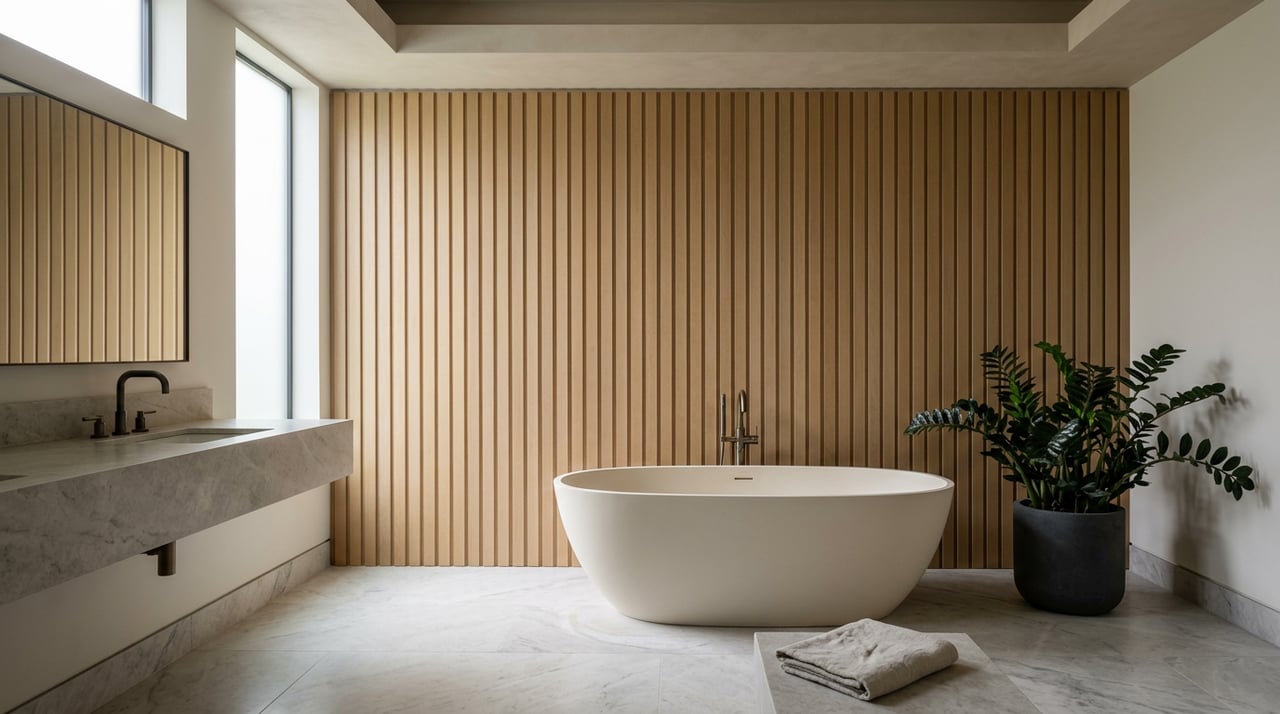
It can have dramatic ceilings, generous entertaining spaces, substantial bedrooms and exceptional outdoor areas.
What changes is the relationship between the spaces.
The dining room is large enough for the way it is used.
The kitchen supports the household without becoming unnecessarily monumental.
The primary suite provides genuine separation without becoming an entire wing that sits unused.
Guest accommodations are sufficient without dominating the property.
The outdoor spaces are designed around actual patterns of use.
The residence feels generous without feeling excessive.
That is a different kind of sophistication.
The Return of Proportion
Architecture has always understood something that real estate marketing sometimes forgets:
Proportion matters more than raw dimension.
A room can feel extraordinary because its ceiling height, window placement, furniture scale, natural light and relationship to adjoining spaces are beautifully balanced.
Another room can be much larger and feel strangely empty.
The luxury market may therefore be rediscovering an old architectural principle:
A well-proportioned space can feel more valuable than a larger one.
This is particularly important as buyers become more design literate.
They notice when space has been intentionally composed.
They also notice when square footage has simply been added.
The New Competition Is Between Experience and Inventory
Imagine two residences.
One offers twelve bedrooms, ten living areas, three kitchens, a massive theater, multiple lounges and extensive service spaces.
The other offers six bedrooms, a beautifully proportioned great room, a dedicated library, a sophisticated kitchen, a private study, exceptional outdoor rooms and carefully designed guest accommodations.
The first property has more.
The second may have more meaningful use.
Which one is more luxurious?
The answer depends entirely on the buyer.
And that is increasingly the point.
Luxury cannot be reduced to a universal inventory.
The Amenity Arms Race Has a Limit
For years, luxury development has followed an amenity escalation model.
If one residence has a gym, another adds a spa.
If one has a theater, another adds a screening lounge.
If one has a pool, another adds multiple water features.
If one has a wine cellar, another adds a tasting room.
The problem is that amenities can eventually become competitive rather than useful.
A property can contain impressive facilities that its owners rarely use.
At that point, the amenity has become a marketing feature rather than a lifestyle asset.
The next stage of luxury may therefore involve amenity editing.
Not eliminating amenities.
Choosing them more carefully.
Private Amenities Versus Private Burdens
A private gym can be wonderful.
A private spa can be extraordinary.
A private theater can transform entertaining.
But each also creates maintenance, cleaning, equipment replacement and operating requirements.
The more sophisticated question is therefore not:
"Does this property have a spa?"
It is:
"Will this household genuinely use the spa enough to justify owning and operating it?"
That is a surprisingly practical question for the luxury market.
And practicality does not make luxury less luxurious.
It can make it more intelligent.
When Square Footage Stops Telling the Story
There is a point at which additional square footage produces diminishing experiential returns.
The first additional thousand square feet may completely change a home.
The next may add another valuable function.
Eventually, however, the incremental benefit becomes smaller.
A larger corridor does not necessarily improve the residence.
A second formal living room may not add much.
An additional guest suite may remain empty most of the year.
A giant entertainment room may compete with the outdoor spaces that the household actually prefers.
At this point, the buyer is paying for volume rather than experience.
That distinction matters.
Outdoor Space Changes the Calculation in South Florida
South Florida makes the relationship between interior and exterior particularly important.
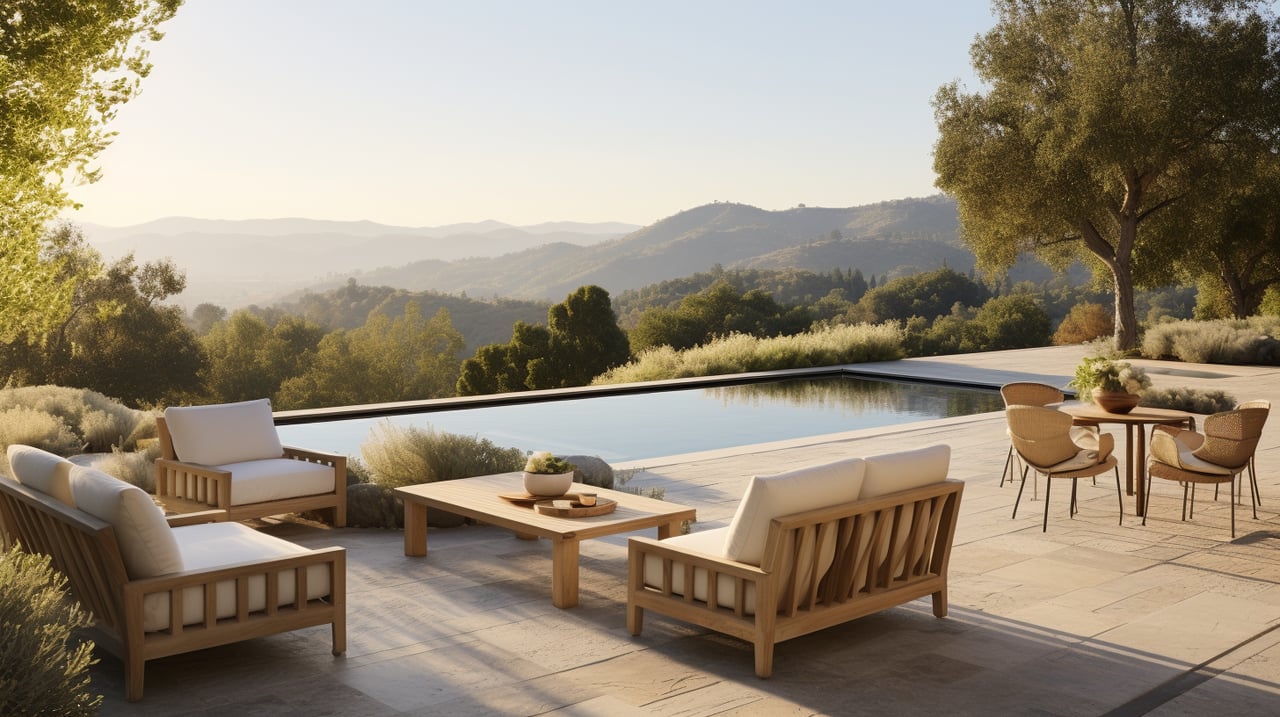
A residence does not necessarily need enormous interior entertainment areas when the property has exceptional outdoor rooms.
A covered terrace.
A pool deck.
A summer kitchen.
A shaded dining area.
A garden.
A waterfront setting.
A private courtyard.
These spaces can significantly expand the functional experience of the property.
This means interior square footage should not always be considered independently from the land and outdoor architecture.
A 5,500-square-foot home with exceptional outdoor living can provide a richer experience than a much larger house whose interior dominates the property.
The Value of Circulation
One of the least discussed elements of luxury architecture is circulation.
How do you move through the residence?
Where do you arrive?
What do you see first?
How far is the kitchen from the dining area?
How does a guest move from the entrance to the entertaining spaces?
Can the household move privately without crossing the social areas?
How does the primary suite connect to the rest of the house?
These questions may have more impact on daily life than another thousand square feet.
A well-designed circulation system makes a house feel effortless.
That is difficult to quantify.
But it is easy to experience.
Luxury Is Beginning to Reward Efficiency
Efficiency is often associated with affordability.
But there is a high-end version of efficiency that has little to do with reducing cost.
It means reducing unnecessary movement.
Reducing maintenance.
Reducing visual clutter.
Reducing unused space.
Reducing operational complexity.
Reducing decisions.
The result is not a cheaper home.
It is a home that uses its resources more intelligently.
That can be a distinctly luxurious experience.
The Home That Feels Larger Than It Is
There is another architectural paradox.
Some of the best-designed residences feel larger than their actual measurements.
This can be achieved through:
- strong sightlines
- layered views
- high ceilings
- carefully placed openings
- continuous materials
- indoor-outdoor connections
- courtyards
- natural light
- thoughtful circulation
- strategic landscaping
The perception of space can therefore be designed.
That makes raw square footage a less complete measure of residential quality.
A smaller but visually expansive residence can feel more generous than a larger property divided into disconnected spaces.
The Luxury of Not Needing Every Room
There is also an emotional dimension to right-sized living.
A home becomes more personal when its rooms have identities.
When every room is necessary, the residence feels intentional.
When there are too many spaces, some inevitably become anonymous.
The owner begins walking past rooms rather than living in them.
Luxury should create possibility.
It should not create obligation.
There is something quietly sophisticated about knowing that every room in the house has a reason to exist.
The Buyer Who Is Planning Ten Years Ahead
This becomes particularly relevant when buyers think beyond the initial purchase.
A residence that works today may become difficult to manage later.
Children may leave.
Travel patterns may change.
Entertaining habits may evolve.
Household staff requirements may change.
A couple may spend more time elsewhere.
The ideal residence therefore needs to work across different phases of ownership.
This does not mean designing for every hypothetical future.
It means avoiding unnecessary excess that could become burdensome.
The best luxury homes can accommodate change without requiring constant expansion or reinvention.
Resale Adds Another Layer
Oversized properties also introduce a resale consideration.
The larger the house, the narrower the pool of buyers who may want to operate it.
A highly specialized residence can become particularly difficult to sell if its size is disconnected from the market's actual demand.
That does not mean large homes are poor investments.
It means buyers should understand that luxury value and market liquidity are not the same thing.
A property can be extraordinary and still appeal to a relatively small audience.
For certain buyers, that is acceptable.
But it should be understood.
The New Luxury Buyer May Be Editing, Not Accumulating
There is a broader cultural shift behind this.
Affluence does not necessarily eliminate the desire for simplicity.
In some cases, it intensifies it.
Once a buyer has experienced multiple large homes, extensive travel and highly amenitized properties, additional features can become less exciting.
The buyer may begin asking different questions.
What do I actually use?
What do I value?
What do I want to maintain?
What creates peace?
What makes entertaining easier?
What makes the property memorable?
What can I remove?
This is not minimalism.
It is selectivity.
The Most Expensive Choice May Be Restraint
Restraint is difficult in luxury construction.
There is always an incentive to add.
Another feature.
Another room.
Another material.
Another amenity.
Another dramatic gesture.
But restraint requires deciding that something does not need to exist.
That decision can be harder than spending money.
The best architecture often contains evidence of what the designer chose not to do.
The same may become true of luxury real estate.
What Buyers Should Measure Instead
When evaluating a high-end residence, square footage should remain part of the analysis.
But it should sit alongside other questions.
How much of the house is used daily?
How efficiently are the spaces connected?
How many rooms have a clear purpose?
How much of the property requires specialized maintenance?
How much outdoor space contributes to the lifestyle?
Does the scale fit the household?
Is the architecture proportionate?
Does the property feel generous or merely large?
And perhaps most importantly:
Would the experience actually improve if the house were bigger?
If the answer is no, additional square footage may not be creating meaningful luxury.
What This Means for Sellers
Sellers of larger luxury residences can benefit from presenting scale differently.
Instead of treating square footage as the headline, demonstrate how the property uses it.
Show the relationship between entertaining spaces.
Explain the separation between private and social areas.
Highlight the rooms that are genuinely useful.
Demonstrate outdoor living.
Explain service circulation.
Show how guests move through the property.
Make the scale understandable.
A buyer should feel the reason behind the size.
What This Means for New Construction
Developers and architects have an opportunity to reconsider the assumptions behind luxury floor plans.
The future may not belong to increasingly enormous residences.
It may belong to better-planned ones.
More purposeful rooms.
More intelligent circulation.
Stronger relationships between indoor and outdoor environments.
Higher-quality materials.
More adaptable spaces.
Better environmental performance.
Less wasted volume.
More meaningful amenities.
The result can still feel extraordinarily luxurious.
It simply does not depend on excess to prove it.
The South Florida Perspective
South Florida remains one of the world's most compelling luxury residential markets precisely because buyers can pursue very different definitions of exceptional living.
Some will want a large waterfront estate.
Others will prioritize architecture.
Some will want extensive entertaining infrastructure.
Others will prefer a refined residence in an established neighborhood.
There is no single model.
But across these categories, one principle is becoming increasingly relevant:
The best property is the one whose scale makes sense for its purpose.
A large waterfront estate can be perfectly right-sized if the land, household and lifestyle justify it.
A more compact architectural residence can be equally luxurious if every element has been considered.
The market does not need one definition of size.
It needs better definitions of value.
MMGLuxury Perspective
At MMGLuxury, we view scale as one factor in a much larger evaluation of luxury property.
Square footage can tell a buyer how much physical space exists.
It cannot tell them whether that space is useful, memorable or well conceived.
When evaluating exceptional South Florida residences, the more revealing questions often concern proportion, circulation, functionality, outdoor living, maintenance requirements and the relationship between the home and the owner's actual lifestyle.
The objective is not to persuade buyers that smaller is better.
It is to help them distinguish meaningful space from merely additional space.
Because at the highest end of the market, paying more for more is easy.
Knowing what is actually worth having requires considerably more judgment.
Final Thought
Luxury real estate spent decades proving that bigger could mean better.
The next generation may be less interested in proving anything.
A truly exceptional residence does not need every possible room.
It does not need every possible amenity.
It does not need to consume every available square foot.
It needs to understand the people who will live there.
It needs enough space for their lives, enough flexibility for change and enough restraint to keep the property from becoming a burden.
The future of luxury may therefore be less about expansion and more about editing.
Not asking how much can fit inside a residence.
But deciding what deserves to be there in the first place.
#MMGLuxury #LuxuryRealEstate #SouthFloridaRealEstate #LuxuryHomes #MiamiLuxuryRealEstate #LuxuryArchitecture #LuxuryHomeDesign #SouthFloridaLuxury #LuxuryProperty #RealEstateIntelligence #LuxuryLifestyle #ResidentialDesign #HighEndRealEstate #LuxuryMarket