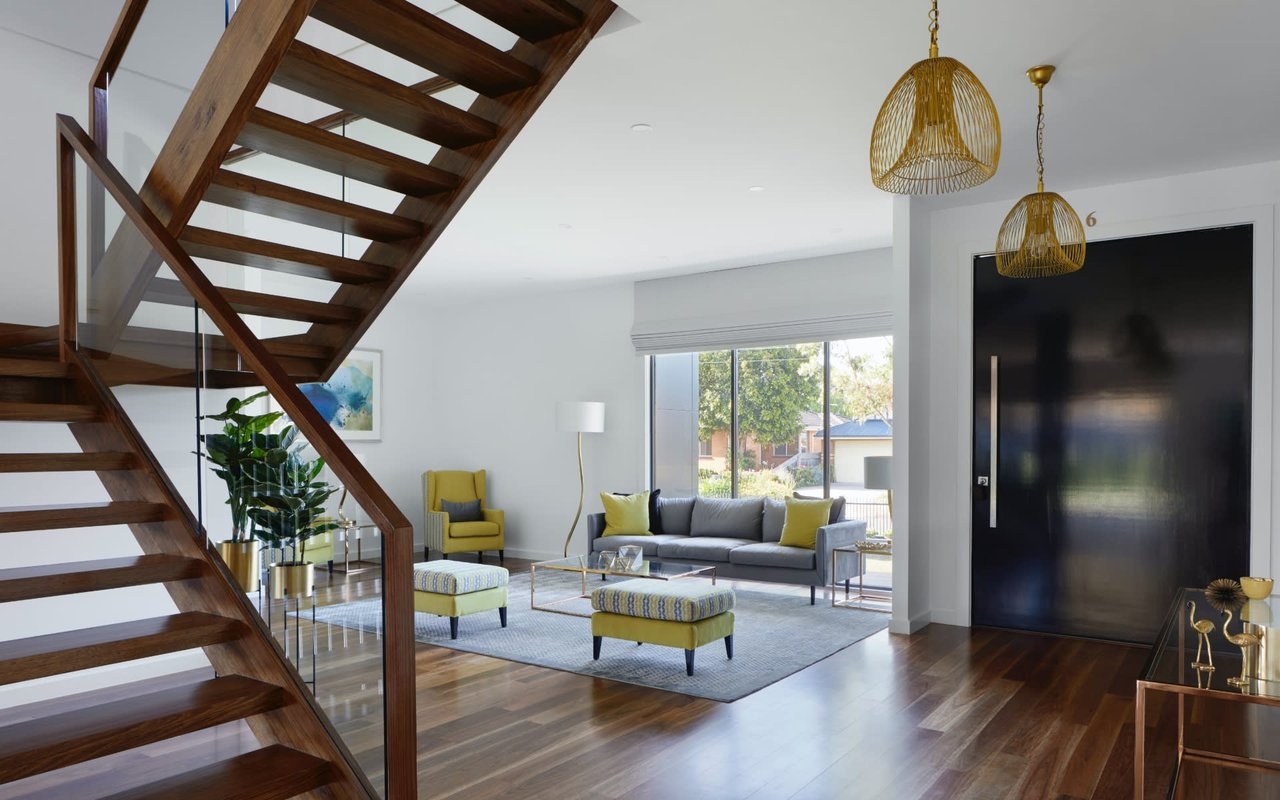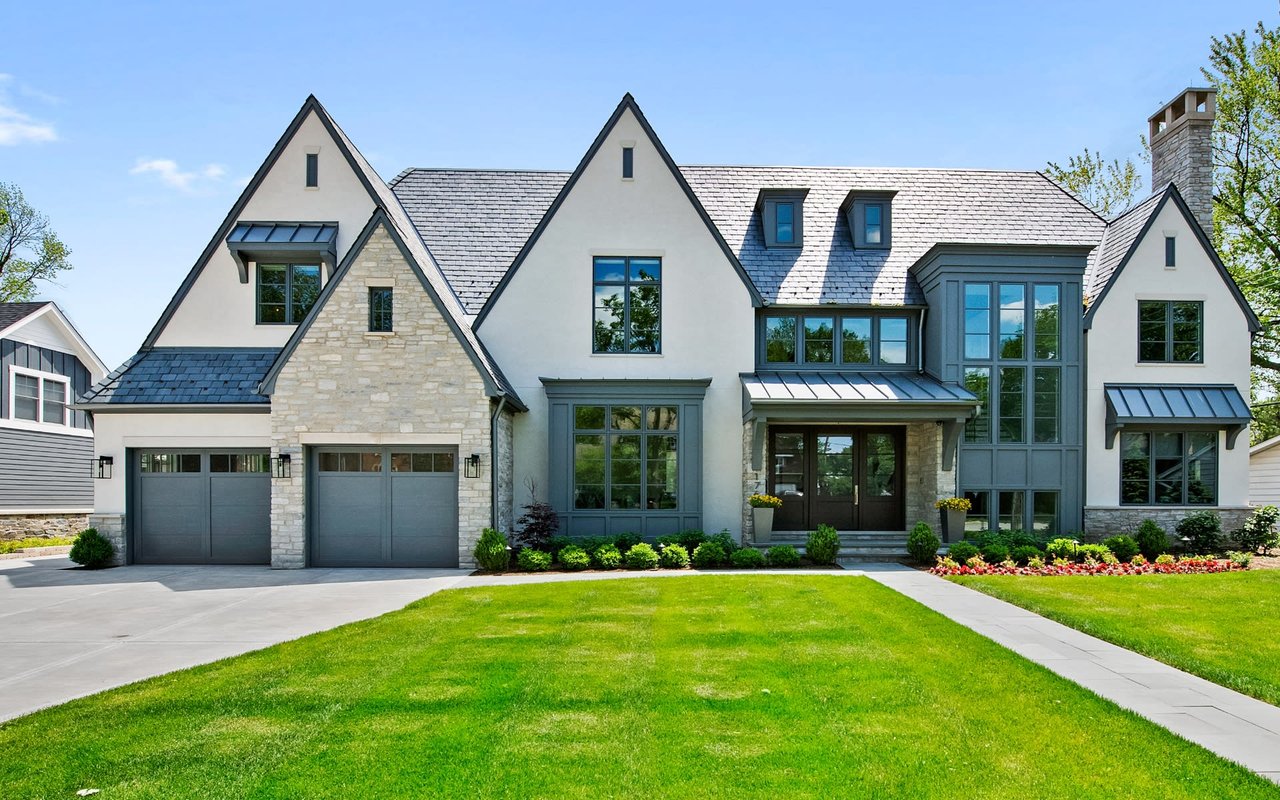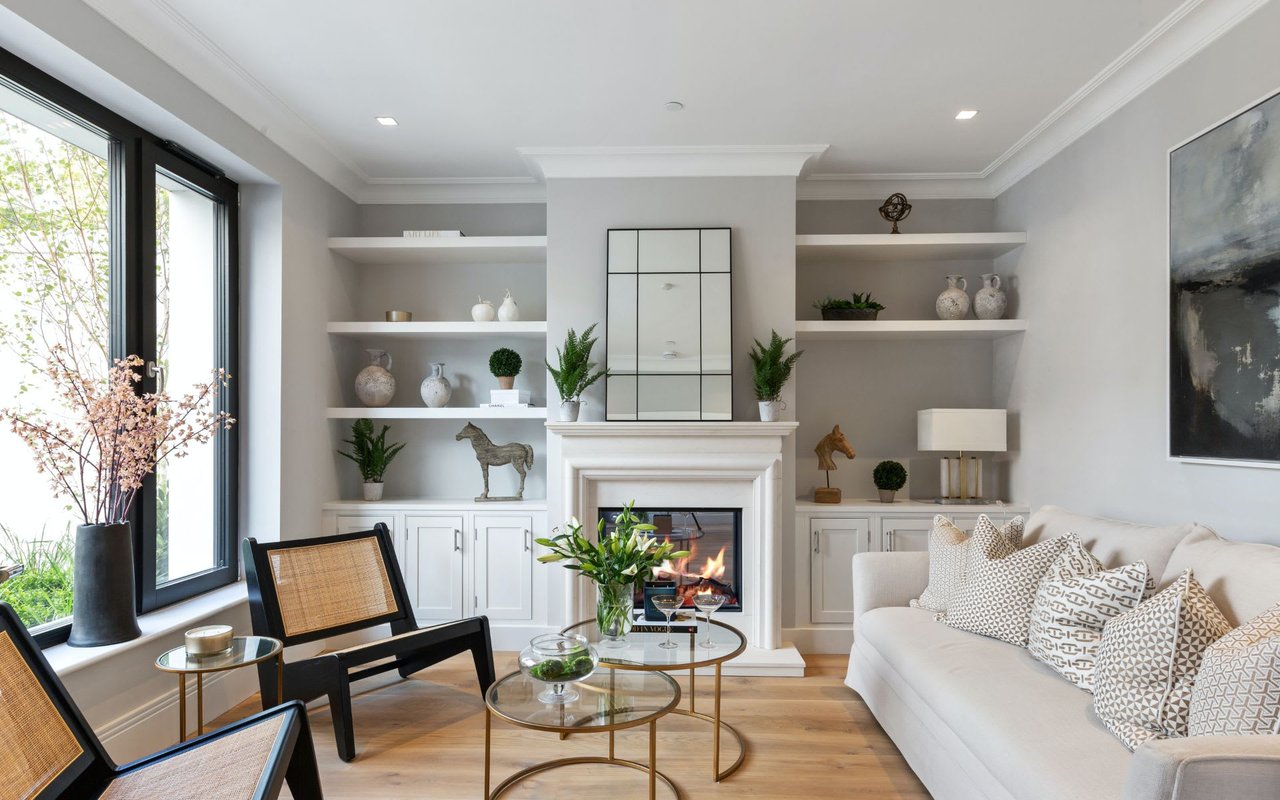
Luxury interiors are often described through individual materials.
Marble countertops.
Wide-plank wood flooring.
Natural stone walls.
Custom millwork.
Brushed metal fixtures.
Hand-finished plaster.
Oversized slabs.
Specialty glass.
Each can contribute to the quality of a residence.
But the presence of premium materials does not automatically create a sophisticated interior.
In fact, a home can contain an impressive collection of expensive finishes and still feel visually fragmented.
The difference is often found in the relationship between materials.
A particular stone may appear in the kitchen and return subtly in the primary bathroom. Wood may continue from the main living areas into private spaces. Metal finishes may establish a consistent language across doors, lighting, cabinetry, and hardware. A plaster wall may provide a quiet background that allows more expressive materials to become focal points.
These decisions create continuity.
The home begins to feel like one architectural composition rather than a collection of individually decorated rooms.
This is particularly important in luxury residences because larger homes naturally contain more spaces, more transitions, and more opportunities for competing materials.
The greater the scale of the property, the greater the need for coherence.
The most sophisticated material palettes are not necessarily the most expensive. They are the ones that make every material feel as though it belongs.
The Difference Between Expensive and Exceptional
Premium materials have inherent value.
Natural stone can offer durability and visual depth. Quality wood can provide warmth and character. Metal can introduce precision and contrast. Glass can connect interiors with the surrounding environment.
But material quality alone does not determine the success of an interior.
Consider a residence containing several types of stone, multiple wood species, different metals, several flooring materials, and numerous decorative surfaces.
Each material may be beautiful individually.
Together, they may create competition.
The eye has difficulty establishing hierarchy because too many elements are asking for attention.
A more restrained palette can sometimes produce a stronger result.
The objective is not to make every room identical.
It is to create enough repetition and relationship that the residence maintains a recognizable visual identity.
Luxury is often more convincing when it feels deliberate rather than abundant.
Material Continuity Across the Home
One of the simplest ways to create cohesion is to allow important materials to reappear.
A flooring material might establish the foundation throughout the primary living areas.
A particular wood tone might appear in cabinetry, doors, and architectural details.
A stone used in the kitchen might return as a bathroom vanity surface or fireplace surround.
A metal finish might be repeated across hardware, lighting, and plumbing fixtures.
The repetition does not need to be literal.
In fact, excessive repetition can make an interior feel mechanical.
Instead, materials can echo one another.
Warm wood can relate to warm stone. A dark metal can provide contrast against both. Natural plaster can soften the transition.
The materials begin to form a family.
This is one of the quiet ways architectural interiors achieve a sense of completeness.
The Foundation Material
Every successful material palette usually has a foundation.
It may be flooring.
It may be stone.
It may be wood.
It may be a neutral plaster or architectural finish.
The foundation establishes the visual baseline for the residence.
Other materials are then selected in relation to it.
For example, a home built around warm natural wood may use stone and metal that reinforce its warmth. A residence centered around pale limestone may introduce wood and darker metal as controlled contrast.
The foundation does not need to dominate.
Its role is to create consistency.
Without a foundation, each room may develop its own visual identity without enough connection to the rest of the property.
That can make a large home feel like a sequence of unrelated interiors.
With a foundation, variation becomes easier.
The residence can evolve from room to room while maintaining an underlying rhythm.
Material Hierarchy
Not every surface needs to be a statement.
This is one of the most important principles in luxury interiors.
A room needs hierarchy.
There should be elements that attract attention, elements that support the composition, and elements that remain deliberately quiet.
A dramatic stone fireplace might be the focal point of a living room.
The surrounding walls do not need to compete with it.
A sculptural marble island may define the kitchen.
The cabinetry can provide a quieter counterpoint.
An expressive bathroom stone can become the central visual element while flooring, walls, and hardware remain restrained.
This hierarchy allows expensive materials to have greater impact.
When every surface is extraordinary, nothing feels particularly special.
The value of a statement material often increases when it is surrounded by restraint.
The Role of Natural Stone
Natural stone remains one of the most important materials in luxury residential architecture because of its combination of permanence, variation, and tactile quality.
But stone selection involves more than choosing a color.
Veining, scale, finish, thickness, orientation, and installation method all influence its character.
A dramatic slab may be most effective when used selectively.
Bookmatching can create a strong visual composition, while a more restrained installation may allow the natural variation of the stone to remain understated.
The way the stone is cut and positioned can also affect the perception of the room.
Large uninterrupted surfaces create calm.
Smaller pieces introduce rhythm.
Highly patterned stone creates visual energy.
The material should therefore be selected according to the role it is expected to play.
The most expensive stone is not necessarily the most appropriate.
The strongest choice is the one that supports the architecture.
Wood as a Counterweight
Wood introduces qualities that stone often does not.
Warmth.
Texture.
Softness.
Visual continuity.
A stone-heavy interior can become visually cool if there is no material to balance it.
Wood can provide that counterweight.
It can appear in flooring, cabinetry, ceilings, doors, wall panels, furniture, or architectural screens.
Its tone matters.
Very different wood species can produce very different atmospheres. Mixing multiple species without a clear relationship can make an interior feel fragmented.
A more cohesive approach may use one dominant wood tone and introduce variation through grain, scale, finish, or application.
The objective is not uniformity.
It is coherence.
Wood can also create continuity between architecture and furniture.
A built-in cabinet may relate to the floor. A ceiling detail may echo the cabinetry. A timber screen may connect the interior to an outdoor terrace.
The material begins to travel through the property.
Metal as a Line of Continuity
Metal is often used in smaller quantities than stone or wood, but its influence can be substantial.
Door handles, cabinet hardware, faucets, lighting fixtures, stair details, railing systems, and furniture accents all introduce metal.
Because these elements are repeated frequently, inconsistent finishes can become visually noticeable.
A residence might contain brushed brass in one room, polished chrome in another, blackened metal elsewhere, and a different bronze throughout the exterior.
Each finish can be beautiful.
Together, they may create unnecessary noise.
A more controlled approach establishes a limited family of metals.
One finish may dominate.
Another can be used selectively for contrast.
The exact combination depends on the architecture and design language.
What matters is that the choices feel intentional.
Metal is often the punctuation of an interior.
Repeated consistently, it can quietly reinforce the identity of the home.
Glass and the Relationship With the Outside
Glass is different from most materials because its primary role is not only visual.
It creates a relationship between interior and exterior.
Large windows, sliding panels, glass doors, and architectural openings can bring landscape into the composition.
The quality of that connection depends partly on what surrounds the glass.
Stone floors may continue onto terraces. Wood ceilings may extend toward covered outdoor spaces. Similar colors may appear in landscaping and interior finishes.
These transitions reduce the perceived boundary between the house and its surroundings.
The material palette becomes a bridge.
This is especially relevant in South Florida luxury residences, where outdoor living can be an important part of the property's identity.
The goal is not necessarily to make indoor and outdoor spaces identical.
It is to make their relationship feel intentional.
The Ceiling as a Material Surface
Ceilings are frequently overlooked in material discussions.
Yet they occupy a significant portion of the visual field.
A wood ceiling can create warmth and intimacy.
A smooth plaster ceiling can create quietness.
Exposed structural elements can emphasize architectural character.
Stone or textured surfaces can establish a dramatic focal point.
The ceiling also influences the perceived height and scale of a room.
Material continuity can extend upward.
A wall material may transition into a ceiling detail. Wood may move from cabinetry into an overhead plane. A plaster finish may unify multiple surfaces.
These transitions can make architecture feel more integrated.
They also provide another way to establish hierarchy.
A dramatic ceiling may require quieter walls and floors.
A visually simple ceiling can allow a highly expressive floor or wall surface to dominate.
The key is balance.
Flooring as the Visual Foundation
Flooring is one of the strongest continuity tools because it physically connects spaces.
A consistent floor material can make multiple rooms feel like part of one larger composition.
Changes can still be introduced where function requires them.
Bathrooms, outdoor areas, service spaces, and specialized rooms may need different materials.
But transitions should feel intentional.
Abrupt changes can create visual fragmentation.
A thoughtful transition may use complementary tones, similar textures, or a clear architectural boundary.
Flooring also influences furniture and lighting.
A highly patterned floor may compete with furniture. A quiet floor can provide a stable foundation for more expressive pieces.
The right floor is not necessarily the most dramatic.
It is the one that allows the architecture above it to work.
The Power of Repetition
Repetition is one of the simplest ways to create coherence.
A material, shape, color, texture, or detail can recur throughout the home.
A stone profile may appear in several rooms.
A wood tone may repeat across different forms.
A particular metal may connect lighting and hardware.
A vertical architectural rhythm may appear in doors, screens, and cabinetry.
Repetition creates recognition.
The eye begins to understand that different rooms belong to the same residence.
This is particularly important in large homes where spaces can otherwise feel disconnected.
The repetition does not need to be obvious.
The strongest examples are often subtle.
A homeowner may not consciously identify the repeated material, but the overall environment feels cohesive.
Variation Prevents Monotony
Continuity does not mean sameness.
If every room uses exactly the same materials in exactly the same proportions, the interior can become repetitive.
Luxury requires a balance between consistency and variation.
A living room might emphasize stone and wood.
A dining room may introduce a richer textile palette.
A bedroom may soften the materials through carpeting or upholstered surfaces.
A bathroom may use a more expressive stone.
The underlying language remains consistent, but each room receives its own emphasis.
This creates identity within the larger composition.
A successful residence can therefore feel unified without feeling repetitive.
The Importance of Transitions
Transitions between materials deserve as much attention as the materials themselves.
Where does wood meet stone?
Where does interior flooring become exterior paving?
Where does plaster meet millwork?
How does one countertop material transition into another?
These junctions can reveal the quality of the design.
A poorly resolved transition can make expensive materials look ordinary.
A carefully resolved transition can make relatively simple materials appear sophisticated.
This is where craftsmanship becomes visible.
Edges, reveals, joints, alignment, thickness, and termination all contribute to the final impression.
Luxury is often found in these small moments.
Material and Architecture
Materials should respond to architecture.
A material palette cannot be selected independently from the building's proportions, lighting, structure, and surroundings.
A minimalist residence may benefit from fewer materials and larger uninterrupted surfaces.
A traditional property may support richer textures and more detailed millwork.
A tropical contemporary home may emphasize stone, wood, glass, and planted surfaces.
A waterfront residence may use materials that visually connect to the surrounding environment.
The material language should reinforce the architectural identity.
When it does, the home feels authored.
When it does not, the interiors can appear as though they were designed independently of the building.
Material and Light
Materials are experienced through light.
The same stone can appear dramatically different under direct sunlight, diffuse daylight, warm evening illumination, or artificial lighting.
Wood grain becomes more pronounced under directional light.
Plaster can reveal subtle texture through shadow.
Metal can become reflective or subdued depending on its finish.
This means material selection should be considered together with lighting.
A surface that looks perfect under showroom lighting may behave differently inside the actual residence.
Natural light, window orientation, artificial lighting temperature, fixture placement, and surface reflectivity all contribute to the final result.
Luxury interiors are therefore not static.
They change throughout the day.
The material palette should remain compelling under those changing conditions.
The Relationship Between Texture and Scale
Texture also has scale.
A heavily textured stone may dominate a small wall.
A fine-grained material may disappear across a very large surface.
Large homes require materials that can maintain their character at architectural scale.
This does not mean everything must be oversized.
It means the pattern and texture need to relate to the surface on which they appear.
A dramatic marble slab can work beautifully as a large kitchen island.
The same pattern repeated across every wall may become overwhelming.
A subtle wood grain can provide continuity across large cabinetry.
A highly patterned wood may be better suited to a smaller focal area.
The relationship between material scale and architectural scale is another form of proportion.
Custom Millwork and Material Integration
Custom millwork can help unify a residence because it connects architecture, storage, and material design.
Cabinetry can repeat the home's dominant wood tone.
Doors can use the same finish as wall panels.
Built-in shelving can echo architectural lines.
Media units can integrate technology into the material palette.
The advantage of custom work is not simply that it looks expensive.
It is that it can make functional elements feel like part of the architecture.
This can reduce visual clutter.
Instead of seeing individual pieces of furniture, appliances, and storage, the eye reads a continuous architectural surface.
In luxury interiors, this level of integration can have a significant impact.
Kitchens and Material Discipline
Kitchens contain a particularly high number of materials.
Cabinetry, countertops, backsplash surfaces, flooring, appliances, hardware, lighting, stools, and fixtures all contribute to the palette.
Without discipline, the kitchen can quickly become visually crowded.
A strong approach establishes priorities.
Perhaps the stone is the focal point.
The cabinetry becomes quieter.
The hardware supports the palette.
The appliances are integrated.
The flooring provides continuity with adjacent spaces.
This allows the kitchen to feel sophisticated without requiring every component to be visually distinctive.
Material discipline is especially important in open-plan residences where the kitchen is visible from several rooms.
The kitchen's material choices become part of the broader living environment.
Bathrooms as Material Compositions
Luxury bathrooms provide an opportunity for more concentrated material expression.
Because they are smaller than major living areas, stronger materials can often be used without overwhelming the architecture.
Stone can wrap from wall to floor.
Wood can soften cabinetry.
Metal can provide contrast.
Glass can separate wet areas without interrupting visual continuity.
The bathroom can become a highly composed environment.
But the same principle applies.
Not every surface needs to compete.
A dramatic stone wall may be enough.
The remaining elements can support it.
The result is often more sophisticated than a bathroom containing multiple statement materials simultaneously.
Bedrooms and Material Quietness
Bedrooms benefit from a different material strategy.
The visual environment generally needs to feel calmer.
Soft surfaces, natural wood, textiles, muted stone, and restrained metal can create a quieter composition.
This does not mean luxury bedrooms should be visually plain.
It means that the hierarchy should support rest rather than stimulation.
Material continuity from the main residence can help maintain identity while allowing the bedroom to feel distinct.
A wood tone may continue into the suite while stone becomes less prominent.
A metal finish may remain consistent while decorative elements become softer.
The result is continuity with a different emphasis.
Exterior Materials and Interior Continuity
The strongest material strategies often extend outside.
A stone used inside may continue onto a covered terrace.
Exterior wood may relate to interior millwork.
Metal details may repeat between indoor and outdoor architecture.
This can make the property feel larger because the same visual language extends across the threshold.
However, exterior materials must also respond to environmental conditions.
South Florida's heat, humidity, rain, and coastal exposure can affect material performance.
The appropriate material for an interior application may not be suitable outdoors.
The design therefore needs to preserve visual continuity without ignoring performance.
Similar does not have to mean identical.
A related material with greater durability may achieve the same architectural connection.
The Economics of Material Choices
Material selection also has a long-term financial dimension.
Premium materials can carry higher acquisition costs, but their ownership implications vary.
Some are highly durable.
Others require specialized maintenance.
Some can be refinished.
Others may be difficult to repair without replacing a large section.
Some natural materials become more characterful with age.
Others may require careful protection to maintain their appearance.
Buyers evaluating highly customized luxury homes should consider not only the initial quality of materials but also their maintenance requirements and expected lifespan.
This is particularly relevant in large residences where the quantity of material can be substantial.
A small difference in maintenance requirements can become meaningful across thousands of square feet.
Luxury is therefore partly about selecting materials that remain appropriate over time.
Patina and the Passage of Time
Not every material should remain unchanged.
Some materials improve through use.
Natural stone can develop variation.
Wood can deepen in character.
Metal can acquire patina.
Leather can become softer.
These changes can contribute to the identity of a home.
The concept of patina is particularly relevant to timeless luxury because it allows a residence to age without appearing neglected.
The distinction is maintenance versus deterioration.
A material with natural patina remains cared for.
A damaged material has lost performance or integrity.
The most successful material palettes anticipate how surfaces will look not only when new, but after years of occupation.
Material Authenticity
There is also growing value in authenticity.
Natural stone should be allowed to display natural variation.
Wood should retain some sense of its material character.
Metal can reveal its texture and finish.
Plaster can show subtle irregularity.
This does not mean craftsmanship should be imperfect.
It means the material should not necessarily be disguised as something it is not.
Authenticity can make an interior feel more grounded.
In a luxury market where highly polished finishes are common, natural variation can become a distinctive quality.
The Risk of Trend-Driven Materials
Interior trends change quickly.
Certain stones, colors, metals, tiles, and decorative treatments can become fashionable and then appear dated.
A luxury residence does not need to avoid trends entirely.
It should simply distinguish between architectural permanence and decorative fashion.
Major surfaces are expensive to replace.
A highly distinctive material used throughout a home can eventually become difficult to update.
A more timeless foundation allows decorative elements to change without requiring major renovation.
This is another reason material continuity matters.
When the underlying palette is coherent, individual pieces can evolve without destabilizing the entire interior.
Material Language and Resale
The material palette can also influence how future buyers perceive a property.
Highly coherent materials can make a home easier to understand visually.
The architecture has a recognizable identity.
Highly personalized choices may be meaningful to the current owner but more difficult for others to interpret.
This does not mean luxury homes should be designed for the broadest possible resale market.
Distinctive architecture is part of their value.
But strong material discipline can allow personality without visual chaos.
A future buyer may change furniture, artwork, or decorative elements while retaining the architectural foundation.
The residence remains adaptable without losing its identity.
What Buyers Should Notice During a Showing
Materials deserve more attention than simply asking whether they look expensive.
Buyers can observe:
- Whether the same materials appear consistently across the home
- How transitions between materials are handled
- Whether statement surfaces have appropriate visual space around them
- The relationship between flooring and cabinetry
- Consistency of metal finishes
- Quality of stone installation and alignment
- How materials respond to natural light
- Whether exterior and interior materials relate to one another
- Maintenance requirements
- Evidence of wear or repairs
- Whether highly customized surfaces could be maintained or replaced in the future
These details can help distinguish a residence with expensive finishes from one with a truly integrated material strategy.
Material Continuity in South Florida Luxury Homes
South Florida's architectural diversity creates a particularly interesting environment for material design.
Contemporary waterfront residences may combine stone, glass, metal, and wood to reinforce connections to the water.
Traditional estates may use limestone, detailed millwork, plaster, and layered landscape.
Modern homes may emphasize large uninterrupted surfaces and restrained palettes.
The region's climate also influences material selection.
Outdoor surfaces must withstand heat, moisture, rainfall, and exposure. Interior materials need to coexist with strong daylight and extensive indoor-outdoor connections.
The strongest residences respond to these conditions rather than applying the same material strategy everywhere.
The palette should belong to the architecture and the place.
The Quiet Discipline Behind a Beautiful Interior
A cohesive material palette can appear effortless.
That is part of its success.
The eye moves from room to room without encountering unnecessary interruptions. Materials repeat subtly. Contrasts are controlled. Statement elements have room to breathe.
This simplicity is rarely accidental.
It requires decisions about what to include and what to exclude.
Which stone?
Which wood?
Which metal?
Where should each appear?
Where should it stop?
Which material should dominate?
Which should disappear into the background?
These questions create the visual language of the residence.
The finished result may feel natural.
The process behind it is highly deliberate.
The Future of Material-Led Luxury
The next generation of luxury residential design is unlikely to be defined solely by increasingly expensive materials.
Instead, greater value may come from how intelligently those materials are used.
Buyers are able to access extraordinary stone, custom millwork, advanced surfaces, specialty metals, and highly crafted finishes.
What becomes difficult to replicate is coherence.
A residence where architecture, landscape, interiors, lighting, and materials share a common language feels more complete than a home where each room attempts to make its own statement.
This is particularly important as luxury homes become larger and more complex.
The more space a residence contains, the more opportunities there are for visual fragmentation.
Material continuity provides a solution.
It gives the property a thread running through its different rooms and experiences.
MMGLuxury Perspective
At MMGLuxury, the evaluation of a luxury residence extends beyond the presence of premium finishes.
The quality of the material palette, the consistency of its application, the craftsmanship of transitions, and the relationship between interior and exterior surfaces can all contribute to how complete and enduring a property feels.
For buyers exploring South Florida luxury real estate, materials should be considered in relation to architecture, climate, maintenance, and long-term ownership.
A home does not become more luxurious simply because it contains more expensive surfaces.
The stronger question is whether those surfaces work together.
When they do, the result is an environment that feels intentional from one room to the next.
Final Thought
The language of a luxury home is rarely spoken through one material.
It is created through relationships.
Stone relates to wood. Metal relates to cabinetry. Glass relates to landscape. Flooring relates to architecture. Light reveals texture. Repetition creates continuity. Contrast creates hierarchy.
The materials become more valuable because they belong to a larger composition.
True material luxury is not the ability to use the most expensive finishes. It is the ability to make every material feel like it was always meant to be there.
#LuxuryRealEstate #SouthFloridaRealEstate #LuxuryHomeDesign #LuxuryInteriors #ResidentialArchitecture #LuxuryLiving #InteriorArchitecture #LuxuryProperty #SouthFloridaHomes #MMGLuxury