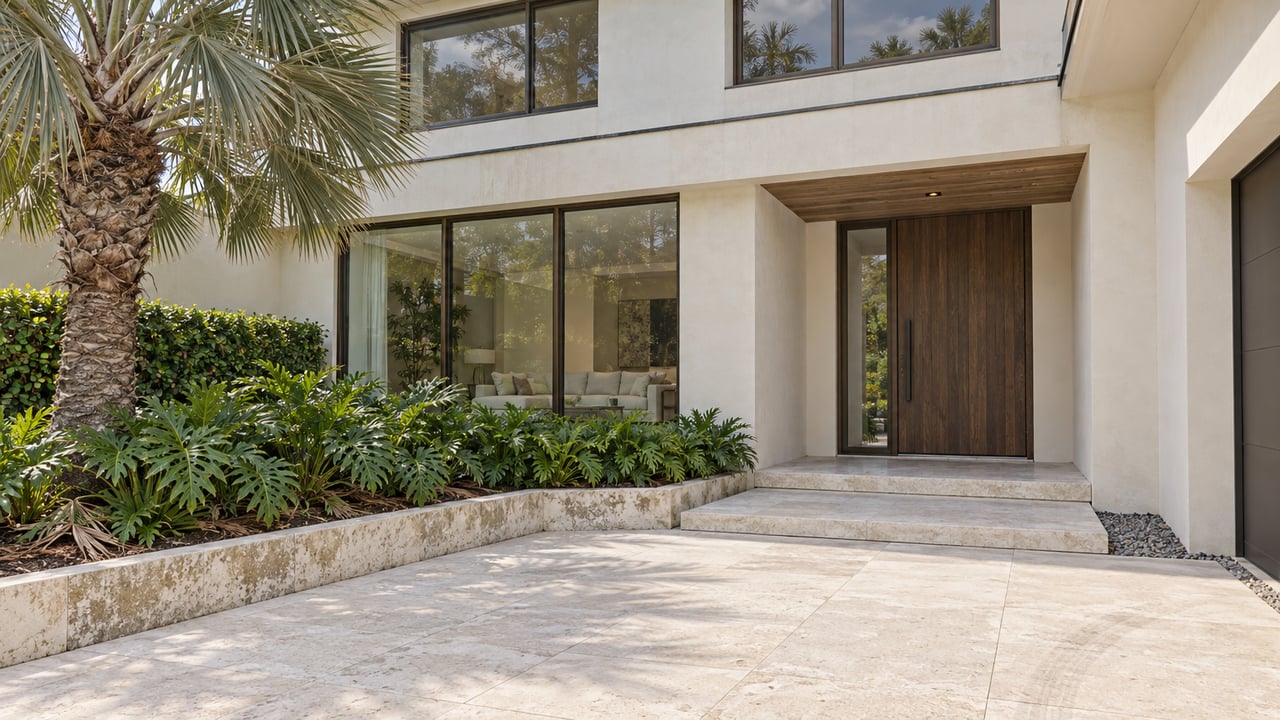
In luxury real estate, windows are often evaluated through their most immediate benefit: the view. Floor-to-ceiling glass overlooking the Atlantic, expansive panes facing a landscaped estate, or carefully positioned openings that capture the light of a South Florida morning can make a powerful first impression.
Yet the visual effect represents only one dimension of window design.
A window is simultaneously an architectural element, a building-envelope component, a source of daylight, a potential point of heat transfer, and a boundary between private living space and the outside world. Its performance influences indoor comfort, energy consumption, noise levels, maintenance requirements, and the way a residence ages over time.
This complexity matters particularly in South Florida, where intense sunlight, humidity, wind-driven rain, coastal exposure, and hurricane considerations place substantial demands on residential glazing systems.
For discerning buyers, the question is not simply whether a home has large windows. It is whether those windows have been designed to serve the architecture, the climate, and the people who live behind them.
The Difference Between Expansive Glass and Exceptional Window Design
Large windows have become a recognizable feature of contemporary luxury residences. They create visual openness, emphasize views, and allow interiors to feel connected to gardens, pools, terraces, and waterfront landscapes.
However, glass area alone does not determine architectural quality.
A residence can contain extensive glazing and still feel uncomfortable, visually unbalanced, or insufficiently private. Poorly positioned windows may expose intimate spaces to neighboring properties. Oversized openings may introduce excessive solar heat. Inconsistent frame profiles can disrupt a carefully composed facade, while poorly detailed assemblies can undermine the clean lines that originally justified the design.
Exceptional window design begins with intention.
Architects consider the orientation of each opening, the view it captures, the room it serves, the degree of privacy required, and the relationship between the window and surrounding materials. The result should feel integrated into the building rather than added as a decorative feature.
A large window in a living room may be appropriate because it frames a distant landscape. A smaller, strategically positioned opening in a bathroom may provide daylight while preserving privacy. A series of carefully proportioned windows may give a traditional residence greater character than an uninterrupted glass wall.
The objective is not to maximize glazing indiscriminately. It is to establish the right relationship between transparency, enclosure, and architectural expression.
For luxury buyers, this distinction helps explain why two properties with similar square footage and comparable views can offer very different residential experiences.
Window Proportions Define the Character of a Home
Windows contribute significantly to a building's architectural identity. Their dimensions, spacing, alignment, frame thickness, and relationship to the facade establish a visual rhythm that can distinguish one residence from another.
In minimalist architecture, slim profiles and expansive panes may reinforce an impression of precision and visual restraint. In Mediterranean-inspired residences, deeper openings, articulated frames, and carefully proportioned windows can contribute to a sense of permanence and depth. In transitional architecture, the challenge is often to balance contemporary openness with the proportions and detailing associated with more traditional forms.
These decisions influence how a home is perceived from the street and how its interiors feel from within.
The height of a window, for example, affects the relationship between the room and the exterior landscape. A low sill may create a stronger connection to a garden, while a higher sill may offer privacy without sacrificing daylight. Vertical windows can emphasize ceiling height, whereas wide horizontal openings can draw attention toward a view.
Frame thickness also matters. An excessively prominent frame may interrupt a carefully composed view, while an extremely narrow profile may be unsuitable for the required structural, thermal, or weather-performance demands.
The best solution is not necessarily the thinnest possible frame. It is the frame that achieves the intended architectural effect while satisfying the technical requirements of the opening.
Buyers evaluating a residence should therefore consider whether the windows appear consistent with the home's architectural language. Are the proportions deliberate? Do the openings align with interior and exterior elements? Are the frames consistent across the facade? Do the windows reinforce the design, or do they appear to have been selected primarily for their visual impact?
These details can reveal the level of coordination behind a property's design.
Glass Selection Influences More Than Transparency
Glass is not a uniform material. Different glazing configurations can produce substantially different results in terms of heat gain, visible light transmission, ultraviolet exposure, sound reduction, and overall comfort.
In South Florida, these differences are especially relevant because abundant sunlight can create significant cooling demands.
Solar-control glazing can help reduce the amount of solar heat entering a home. Low-emissivity coatings can improve thermal performance, while insulated glazing units may reduce heat transfer compared with single-pane alternatives. The appropriate specification depends on the building's orientation, shading strategy, window design, and mechanical systems.
Visible light transmission also requires consideration. A glazing product that reduces solar heat gain may transmit less daylight, depending on its specification. Architects must balance these characteristics to avoid creating interiors that are either excessively bright and warm or unnecessarily dark.
Tinted glass introduces another consideration. Depending on the application, tinting can reduce glare and alter the appearance of the facade. However, it can also change how colors appear from inside and outside the home. Strongly reflective glass may provide some daytime privacy under certain lighting conditions, but it should not be treated as a dependable privacy solution after dark, when interior lighting can reverse the effect.
The objective is to select glass that supports the home's intended performance without compromising the quality of its interiors.
This is particularly important in rooms with expensive artwork, natural stone, hardwood finishes, and carefully selected furnishings. Window treatments, coatings, and orientation all affect how sunlight reaches these materials. Managing direct exposure can help reduce glare and limit some forms of ultraviolet-related fading, although no glazing system eliminates every risk.
A thoughtful specification considers not only how the glass looks on installation day, but also how it will influence the interior environment over years of use.
The South Florida Climate Makes Window Performance Essential
Luxury residences in South Florida must contend with a demanding combination of heat, humidity, intense sunlight, heavy rain, and severe weather exposure.
These conditions make window selection a technical decision as much as an aesthetic one.
Impact-rated windows and doors are important considerations in many South Florida properties. However, the presence of impact glazing alone does not establish that the entire window assembly is suitable for a particular building or location.
Performance depends on the complete system, including the glass, frame, hardware, anchorage, perimeter connections, and installation. The specified product must be appropriate for the building's applicable code requirements, design pressures, and exposure conditions.
A window can have impressive glass specifications and still perform poorly if its frame, connections, or installation details are inadequate.
Water management is equally important. Wind-driven rain can test the performance of window perimeters, sealants, flashing, drainage paths, and adjacent wall assemblies. In coastal environments, salt exposure can also accelerate deterioration of certain metals, finishes, and hardware if they are not selected and maintained appropriately.
These issues may not be visible during a short property showing. A window can appear pristine while concealing aging seals, corrosion, or deficiencies in the surrounding installation.
Buyers considering waterfront or coastal properties should pay particular attention to the age, condition, documented specifications, and maintenance history of the window systems. Where concerns exist, a qualified inspector or building-envelope specialist may be appropriate.
The broader lesson is that luxury construction must respond to its environment. A window system that performs well in one climate or exposure category should not automatically be assumed suitable for another.
Fixed Windows Versus Operable Windows
Fixed glazing and operable windows serve different purposes, and the balance between them can significantly affect how a residence functions.
Fixed windows generally provide unobstructed views and can simplify certain aspects of the window configuration. They are often used where maximum transparency is desirable or where natural ventilation is not a priority.
Operable windows offer the ability to introduce outdoor air when conditions permit. Depending on the design, they may also help occupants respond to changing weather or personal comfort preferences.
The decision becomes more complicated in South Florida, where outdoor humidity, temperature, rainfall, insects, and air-conditioning demands influence whether natural ventilation is practical.
Opening windows in humid conditions can introduce moisture that the cooling system must subsequently manage. In some circumstances, this can increase energy use or contribute to indoor humidity problems if ventilation and air-conditioning strategies are not coordinated.
Consequently, operable windows should be evaluated according to how the home will actually be occupied rather than treated as an automatic upgrade over fixed glass.
Hardware quality, ease of operation, cleaning access, insect-screen integration, and long-term serviceability also matter. A beautiful window that is difficult to open, awkward to clean, or expensive to repair may become a recurring inconvenience.
For buyers, the most useful question is whether each window type serves a clear purpose. The strongest designs combine views, ventilation, environmental control, and ease of maintenance according to the needs of individual rooms.
Privacy Without Sacrificing the View
Transparency is one of the defining attractions of contemporary luxury architecture. It can also create a challenge when a property is surrounded by neighboring homes, public spaces, or areas with regular pedestrian and vehicle activity.
Privacy must be designed rather than assumed.
Window placement is often the first line of defense. A carefully positioned opening can capture a garden or water view while avoiding direct sightlines into a neighboring bedroom. Clerestory windows can bring daylight into selected spaces without creating the same level of exposure as full-height glazing. Landscape elements, architectural screens, and setbacks can further moderate visibility.
The relationship between interior lighting and exterior darkness also deserves attention. During the day, bright outdoor conditions may make some windows appear relatively private. At night, illuminated interiors can become visible from outside, particularly where glazing is clear and no effective screening is present.
Window coverings remain important even in homes designed around expansive glass. Motorized shades, layered curtains, and discreet blinds can allow occupants to change the degree of privacy according to the time of day and the activity taking place.
The integration of these systems should be considered early in the design process. Shade pockets, electrical provisions, mounting details, and clearance requirements are easier to coordinate during construction than after the interior is complete.
For luxury buyers, privacy should be evaluated at different times and from different viewpoints. A residence that feels secluded during a midday showing may offer a different experience after dark or when neighboring properties are occupied.
The objective is not to eliminate transparency. It is to give residents meaningful control over it.
Acoustic Comfort Is Part of Window Quality
Views and daylight tend to receive immediate attention during property tours. Sound is less visible, but it can have an equally significant influence on residential comfort.
Road traffic, aircraft, landscaping equipment, nearby construction, and activity from neighboring properties can affect how peaceful a home feels. Waterfront residences may also experience sound from boats, marinas, and outdoor entertaining.
Windows play an important role in managing this exposure, although their effectiveness depends on the complete assembly and the conditions surrounding the building.
Acoustic performance can be influenced by glass thickness, the use of laminated glass, differences between glass-pane thicknesses, the spacing within insulated glazing units, frame construction, seals, and the quality of installation. Different combinations perform differently across sound frequencies, so a single specification does not guarantee the same outcome in every environment.
The weakest element in the overall enclosure can limit the benefit of otherwise high-performing glazing. Gaps, poorly sealed joints, and other openings can allow sound to bypass the glass.
Buyers should therefore avoid assuming that expensive windows necessarily create a quiet interior. Where noise is a concern, the actual acoustic conditions should be assessed.
Visiting a property at different times can reveal patterns that are not apparent during a scheduled showing. A bedroom overlooking a road may feel calm in the afternoon but noticeably different during morning traffic. An outdoor entertaining area may also create sound exposure that affects neighboring rooms.
Acoustic comfort is particularly valuable in bedrooms, home offices, libraries, and private wellness spaces. In these areas, a modest improvement in sound control may contribute more to everyday satisfaction than an additional architectural feature that receives greater visual attention.
Window Treatments Should Be Integrated Into the Architecture
Window treatments are often considered late in the interior-design process. In high-end homes, this can result in compromises that affect both appearance and functionality.
Motorized shades, recessed tracks, layered curtains, and automated controls can be coordinated with the architecture to maintain clean sightlines and simplify daily operation. When planned early, these systems can be incorporated into ceiling details, cabinetry, electrical layouts, and home-automation infrastructure.
When introduced after construction, they may require exposed tracks, visible wiring, additional electrical work, or modifications to finished surfaces.
The choice of treatment also affects how a room is experienced. Sheer fabrics can soften daylight and maintain a degree of visual connection with the outdoors. Blackout systems can support sleep in bedrooms. Solar shades may reduce glare in offices and media rooms, while heavier curtains can contribute to the room's acoustic character.
No single treatment is appropriate for every space.
A living room intended to emphasize a landscape may require a system that disappears when not in use. A bedroom may prioritize darkness and privacy. A home office may need glare control for screens without eliminating useful daylight.
The most successful solutions reflect these different requirements while maintaining visual consistency throughout the residence.
Automation can add convenience, but its value depends on reliability, intuitive controls, and practical maintenance. A system should remain understandable and serviceable rather than becoming an unnecessarily complicated layer of technology.
For buyers, the presence of motorized shades is less important than the quality of their integration and the ease with which they can be operated, maintained, and repaired.
Maintenance, Durability, and the Cost of Ownership
Windows are long-term building components. Their financial implications extend beyond the initial purchase and installation.
Frames, finishes, seals, tracks, rollers, hinges, locking mechanisms, and electronic controls all have different maintenance requirements. Coastal exposure can place additional demands on materials and hardware, particularly where salt-laden air and moisture are common.
Some frame materials may require periodic refinishing or careful cleaning. Certain finishes may be more vulnerable to environmental exposure than others. Moving components can wear, and perimeter sealants may eventually require inspection or renewal.
Large or unusually shaped windows can also create practical challenges. Cleaning access may be difficult on upper floors, while custom components may take longer to source if replacement becomes necessary.
These considerations do not make complex glazing undesirable. They make informed specification and maintenance planning more important.
A buyer should consider whether the home has accessible documentation for its window systems, including manufacturer information, product specifications, warranties, installation records, and maintenance guidance. Where available, records of inspections or previous repairs can help establish the condition of the assemblies.
Replacement costs should also be considered in context. Custom glazing, specialized frames, and large-format assemblies can be expensive to replace, particularly if the original system is discontinued or the opening requires modifications.
A residence with well-documented, serviceable windows may offer a more predictable ownership experience than a visually impressive property with unknown specifications and limited maintenance records.
How Windows Influence Resale Appeal
Window design can influence how buyers perceive a property, but its contribution to resale value is rarely determined by one feature alone.
Large windows may enhance views, strengthen architectural identity, and make interiors feel connected to the landscape. High-quality glazing can support comfort, reduce unwanted heat gain, and improve the experience of rooms exposed to noise or intense sunlight.
These benefits can make a residence more compelling in the marketplace, particularly when the window system is consistent with the home's overall quality.
However, expansive glass is not universally desirable. Some buyers prioritize privacy, shaded interiors, traditional architectural proportions, or reduced maintenance. Others may view extensive glazing as a concern if they anticipate higher cooling demands, limited furniture placement, or difficult window cleaning.
The property's location and design therefore matter.
In a waterfront residence, carefully positioned glazing may be central to the property's appeal. In a secluded estate, smaller and more controlled openings may reinforce privacy and architectural character. In a neighborhood with closely spaced homes, the success of a window strategy may depend more on orientation and screening than on the total area of glass.
Resale appeal is strongest when windows solve the specific problems of the property and complement the preferences of its likely future buyers.
For owners planning renovations, this is an important distinction. Replacing windows solely to create a more contemporary appearance may not deliver the best result if the new configuration undermines privacy, introduces technical complications, or conflicts with the original architecture.
A well-considered investment improves the quality of the home as a complete residential environment.
What Discerning Buyers Should Examine During a Showing
Window systems deserve closer inspection than they typically receive during a property tour. Buyers do not need to become glazing specialists, but a few targeted questions can help identify areas that require further investigation.
Architectural integration. Examine the consistency of frame profiles, window proportions, and alignments. Consider whether the openings support the home's architectural character and the way its rooms are furnished.
Environmental comfort. Pay attention to excessive glare, noticeable heat near the glass, condensation, and differences in comfort between rooms. These observations are not conclusive diagnoses, but they can indicate where additional assessment may be useful.
Operation and condition. Where permitted, test operable windows and doors. Look for difficult movement, damaged seals, visible corrosion, deteriorated finishes, or signs of water intrusion.
Privacy. Evaluate sightlines from neighboring properties, streets, and outdoor areas. Consider the home's appearance after dark and whether existing window treatments provide sufficient control.
Noise. Listen for traffic, aircraft, mechanical equipment, and nearby activity. If the property is in a noisy setting, consider a second visit at a different time or a professional acoustic assessment.
Technical documentation. Ask for available product specifications, permits, warranties, and records of replacement or repair. Confirm that impact and other required performance characteristics are appropriate for the property's location and applicable regulations.
Maintenance access. Consider how exterior glass will be cleaned and how moving parts, seals, and controls will be serviced. Difficult access can create recurring costs.
For a substantial purchase, these questions can be incorporated into the broader inspection process. A qualified professional can assess issues that cannot be determined reliably through visual observation alone.
The Window as a Long-Term Design Decision
A window is often selected early in a home's design and then expected to perform for decades. Its effects, however, continue long after the initial architectural concept has been realized.
It shapes how morning light enters a bedroom, whether a living room overheats in the afternoon, how clearly a landscape is experienced, and how effectively residents can separate themselves from the activity outside. It influences the maintenance burden of the building and can affect the cost and complexity of future renovations.
These are interconnected decisions.
A window that maximizes the view but compromises comfort may require additional shading or mechanical cooling. A highly customized assembly may contribute to architectural distinction but create more complicated replacement requirements. A glazing system that performs well technically may still disappoint if its proportions conflict with the interior or if its placement exposes private spaces.
The best solutions account for these relationships from the beginning.
In luxury architecture, precision is not simply about achieving a beautiful visual result. It is about ensuring that the visual result remains comfortable, functional, and appropriate to the property throughout its life.
MMGLuxury Perspective
In South Florida's luxury real estate market, windows are part of the relationship between architecture, location, and everyday living. Their value cannot be measured by glass area alone.
For buyers, the most important considerations extend beyond the immediate view. The quality of the window system, its response to the climate, the level of privacy it provides, and the way it contributes to indoor comfort can all influence the long-term experience of ownership.
A well-designed window frames the landscape without surrendering control of the interior. It brings daylight into a room while accounting for heat and glare. It supports the architectural identity of the residence while meeting the practical demands of the environment.
These qualities are especially important when evaluating properties with extensive glazing, coastal exposure, or highly customized architectural features. The details may not dominate a listing photograph, but they can have a lasting influence on comfort, maintenance, and buyer confidence.
For those exploring luxury homes across South Florida, understanding the complete window system can provide a more informed basis for comparing properties. It helps distinguish visual impact from lasting performance and reveals how carefully a residence has been designed to support the people who live in it.
Final Thought
The most successful luxury homes do not treat windows as isolated design features. They use them to establish a deliberate relationship between interior space, natural light, privacy, and the surrounding environment.
Expansive glazing can be extraordinary when it is supported by the right proportions, materials, technical specifications, and environmental strategy. Without those considerations, even the most impressive view can come with compromises.
Ultimately, exceptional window design is measured not only by what a homeowner sees through the glass, but also by how well the home performs on the other side of it.
#MMGLuxury #SouthFloridaRealEstate #LuxuryRealEstate #LuxuryArchitecture #LuxuryHomeDesign #ArchitecturalDesign #SouthFloridaHomes #RealEstateInsights