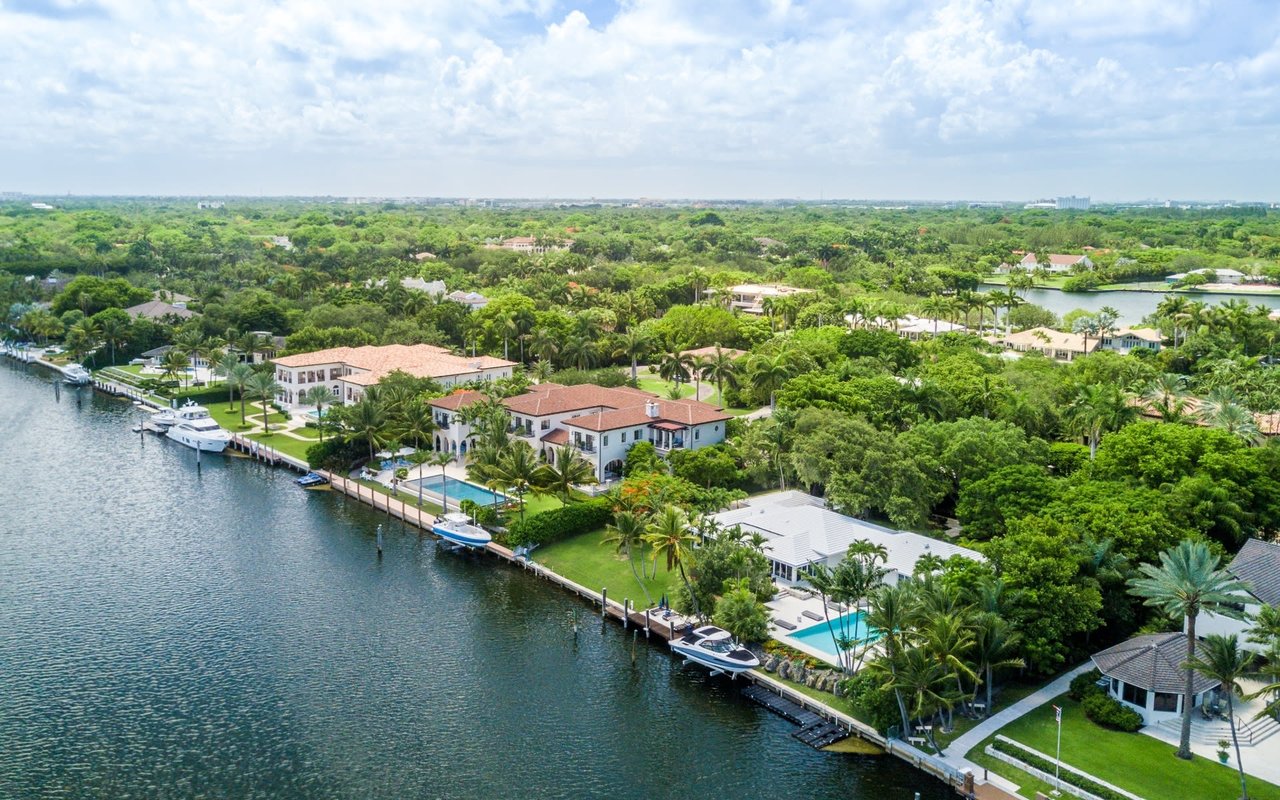
Luxury real estate has always occupied a unique position within the broader property market. While conventional housing is often evaluated through practical considerations such as affordability, utility, and accessibility, the luxury segment operates according to a different set of principles. At the highest levels of the market, value is frequently influenced by factors that cannot be easily measured through traditional real estate metrics alone.
One of the most powerful yet often overlooked drivers of long-term luxury property performance is irreplaceability.
In a world where technology can replicate experiences, products can be mass-produced at scale, and information can be accessed instantly from virtually anywhere, truly irreplaceable assets have become increasingly rare. This rarity is precisely what gives them their enduring appeal.
For affluent buyers, luxury real estate is not simply about acquiring square footage or securing a desirable address. It is increasingly about owning something that cannot be recreated, duplicated, or substituted. The economic significance of this shift extends far beyond individual transactions. It influences pricing power, market resilience, buyer behavior, and the long-term positioning of entire luxury markets.
Understanding the economics of irreplaceability provides valuable insight into why certain properties continue to outperform, why some locations command extraordinary premiums, and why the most coveted luxury assets often seem immune to the forces that affect broader housing markets.
The Shift From Utility to Uniqueness
Traditional real estate markets are largely driven by utility.
A buyer seeking a primary residence typically evaluates factors such as commute times, school districts, living space, and affordability. While these considerations remain relevant across all market segments, luxury buyers often approach acquisitions from a fundamentally different perspective.
Once practical needs have been satisfied, decision-making begins to shift toward differentiation.
Affluent purchasers frequently have access to numerous properties capable of meeting their functional requirements. What distinguishes one opportunity from another is often not utility but uniqueness.
This distinction becomes increasingly important as wealth grows.
The more options available to a buyer, the more valuable differentiation becomes. A luxury residence that offers an experience, setting, architectural identity, or ownership proposition unavailable elsewhere naturally occupies a stronger position within the market.
Irreplaceability emerges when a property possesses characteristics that cannot be replicated regardless of budget.
A penthouse can be renovated.
A mansion can be expanded.
Amenities can be upgraded.
However, certain attributes remain impossible to reproduce.
The oceanfront parcel with unobstructed views.
The estate situated on a historically significant piece of land.
The residence designed by a renowned architect whose work can never be recreated.
The private setting protected by geography rather than development regulations.
These qualities exist beyond construction costs. They represent finite opportunities that become increasingly valuable as demand grows and supply remains fixed.
Scarcity Versus Irreplaceability
Scarcity and irreplaceability are often discussed interchangeably, yet they are not identical concepts.
Scarcity refers to limited supply.
Irreplaceability refers to the impossibility of substitution.
A luxury condominium tower may contain only a small number of residences. This creates scarcity.
However, if similar towers continue to be built nearby, the asset may not be truly irreplaceable.
Conversely, a historic waterfront estate occupying a location that can never be replicated possesses a different level of market significance.
No amount of capital can create another identical opportunity.
This distinction is critical because scarcity can be increased through future development, while irreplaceability cannot.
The luxury assets that tend to demonstrate the strongest long-term performance are often those that combine both characteristics.
They are limited in supply today and impossible to reproduce tomorrow.
This combination creates powerful economic advantages that become increasingly apparent over extended ownership periods.
Why Affluent Buyers Pursue Irreplaceable Assets
The motivations driving affluent buyers have evolved considerably over the past several decades.
Historically, luxury purchases were often associated with visible displays of success. While status remains a component of ownership decisions, many high-net-worth individuals now prioritize asset quality over asset visibility.
As wealth accumulates, priorities frequently shift toward preservation, stability, and long-term positioning.
Irreplaceable properties align naturally with these objectives.
Unlike trend-driven assets that may fluctuate in desirability, irreplaceable properties derive their value from characteristics that remain constant regardless of changing market preferences.
A rare location remains rare.
A protected view remains protected.
A historically significant estate remains historically significant.
These enduring attributes create confidence among buyers seeking assets capable of retaining relevance across generations.
In many respects, luxury real estate begins to resemble fine art, rare watches, collectible automobiles, or other highly sought-after tangible assets.
The value is not solely determined by utility.
It is influenced by uniqueness, provenance, desirability, and the inability to create additional supply.
The Power of Finite Geography
Perhaps the clearest example of irreplaceability within luxury real estate is geography.
Land is finite.
Prime land is even more finite.
Certain locations possess natural advantages that cannot be engineered or manufactured.
Oceanfront settings, elevated ridgelines, private peninsulas, and iconic urban viewpoints represent opportunities constrained by geography itself.
These environments benefit from a structural limitation on future supply.
As surrounding regions develop and populations expand, the relative scarcity of these locations often becomes more pronounced.
This dynamic creates an interesting economic phenomenon.
Demand can increase indefinitely.
Supply cannot.
Over time, this imbalance tends to strengthen the position of properties occupying truly exceptional locations.
The value lies not merely in the home but in the impossibility of creating additional opportunities equivalent to it.
Architecture as an Irreplaceable Asset
While location often receives the greatest attention, architecture can also contribute significantly to irreplaceability.
Not all luxury homes are architecturally significant.
Many offer exceptional quality, premium finishes, and impressive amenities without possessing a distinctive design identity.
Others achieve something more enduring.
They become recognizable.
Memorable.
Influential.
Properties designed by respected architects or associated with important design movements often acquire value beyond their physical components.
Their significance extends into cultural and historical contexts.
As time passes, these homes frequently become increasingly difficult to replicate.
The architectural vision reflects a specific moment, a specific creator, and a specific set of circumstances that can never be fully recreated.
This transforms architecture from a feature into an asset.
MMGLuxury Perspective
The most resilient luxury properties are often those that possess qualities money alone cannot reproduce.
In an increasingly competitive global luxury marketplace, buyers are becoming more sophisticated in how they evaluate value. Rather than focusing solely on size, amenities, or short-term trends, many are identifying opportunities that offer enduring differentiation.
Irreplaceability creates a powerful foundation for long-term desirability because it exists independently of changing market conditions. A property's uniqueness does not disappear during periods of uncertainty. If anything, its significance may become even more apparent as buyers place greater emphasis on quality and permanence.
For affluent purchasers, understanding the economics of irreplaceability is not simply about acquiring a luxury home. It is about recognizing which assets are most likely to retain their relevance, prestige, and desirability decades into the future.
Final Thought
Markets evolve. Trends emerge and fade. Preferences change.
Yet certain assets remain consistently sought after because they offer something that cannot be recreated.
The future of luxury real estate may increasingly belong to properties that stand beyond comparison—not because they are the most expensive, but because they are the most irreplaceable.